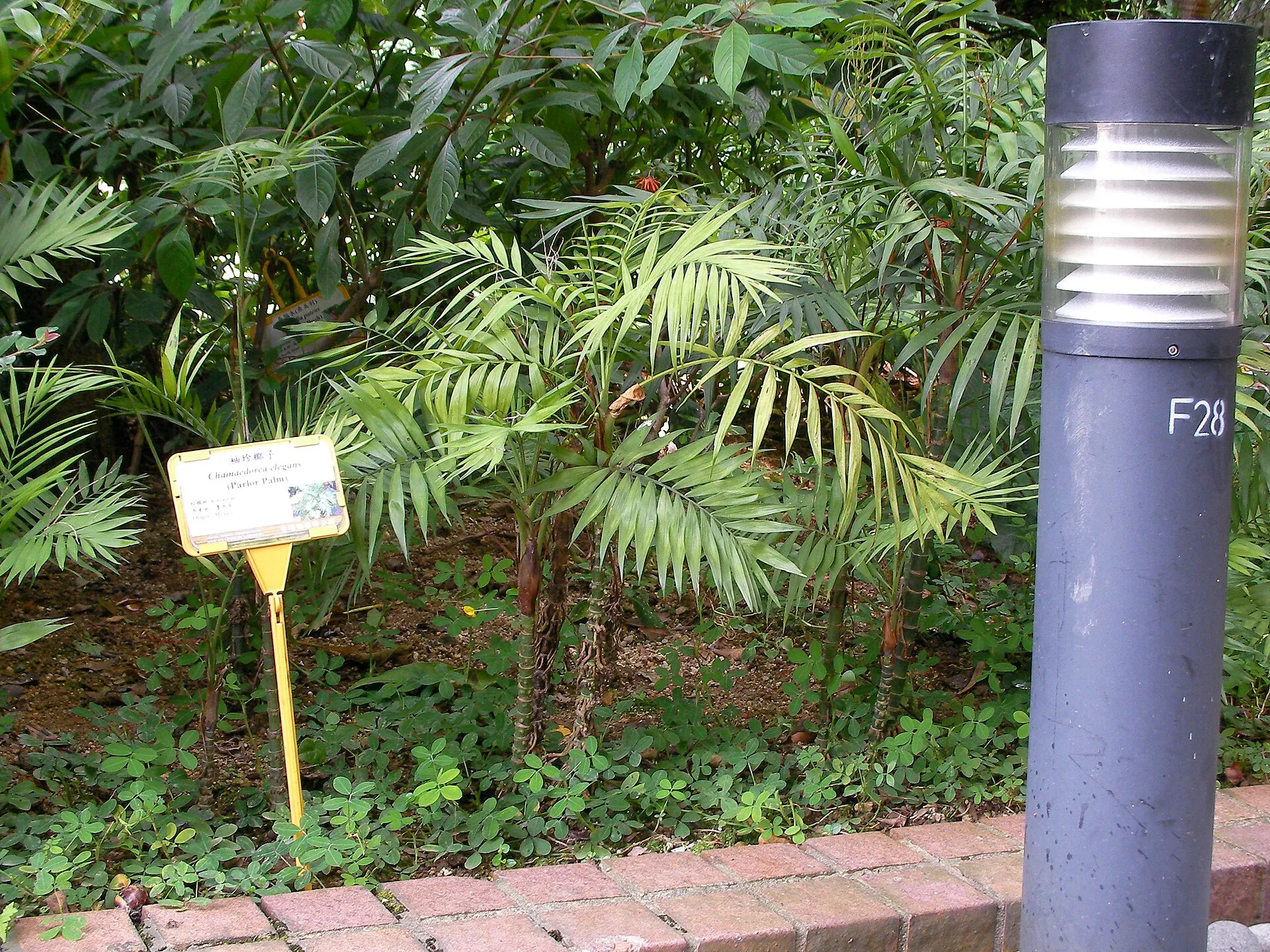
Chamaedorea elegans has been a houseplant since Victorian times, and it is one of very few palms that genuinely does well in an ordinary room rather than slowly dying in one.
It reaches about 1.2m (4ft) indoors, slowly, and is non-toxic to cats and dogs.
Light
Chamaedorea elegans grows best in medium indirect light, and tolerates low light well. A spot away from the window is usually better than one on the sill.
Too much light
Direct sun scorches the fronds, bleaching them and leaving dry brown patches.
Watering
Water when the top 3-4cm (1-1.5 inches) of soil is dry, then let it drain fully.
On average:
- Spring & summer: once a week
- Autumn & winter: once every 2-3 weeks
Overwatering is the usual cause of death. Palms have fine roots that rot quickly in soggy soil.
Signs of overwatering
- Fronds yellow from the bottom of the plant upward
- Base of the stems goes soft
- Soil stays wet for days
Signs of underwatering
- Frond tips go brown and dry
- Whole fronds go pale and crisp
Humidity and temperature
Average household humidity is acceptable, though higher humidity reduces the brown tips they are prone to.
Keep it between 16°C and 26°C (61-79°F), away from radiators and cold draughts.
Soil and repotting
Soil
Standard potting compost with perlite mixed through.
Repotting
Every 2 to 3 years at most. Palms dislike root disturbance and often sulk for months afterwards, so only repot when genuinely necessary.
Several plants are usually potted together to look fuller. Do not try to separate them, because the roots are tangled and the division rarely survives.
Feeding
Half-strength balanced fertiliser every 6 to 8 weeks in spring and summer. Nothing in winter. Palms are sensitive to fertiliser salts.
Pruning and grooming
Cut whole fronds off at the base once they have gone fully brown. Do not trim the growing tip, because a palm grows from a single point and cutting it stops that stem permanently.
Wipe the fronds occasionally, and check the undersides for spider mites while you do.
Common problems
Brown frond tips
Very common and rarely serious. Dry air, minerals in tap water, or overfeeding. Trim the brown part off following the natural leaf shape.
Yellowing lower fronds
Normal in small numbers as the plant ages. Several at once means overwatering.
Fine webbing between fronds
Spider mites, which love the dry air palms are often kept in. Isolate and treat promptly.
No new growth
Normal in winter, and normal generally. This is a slow plant.