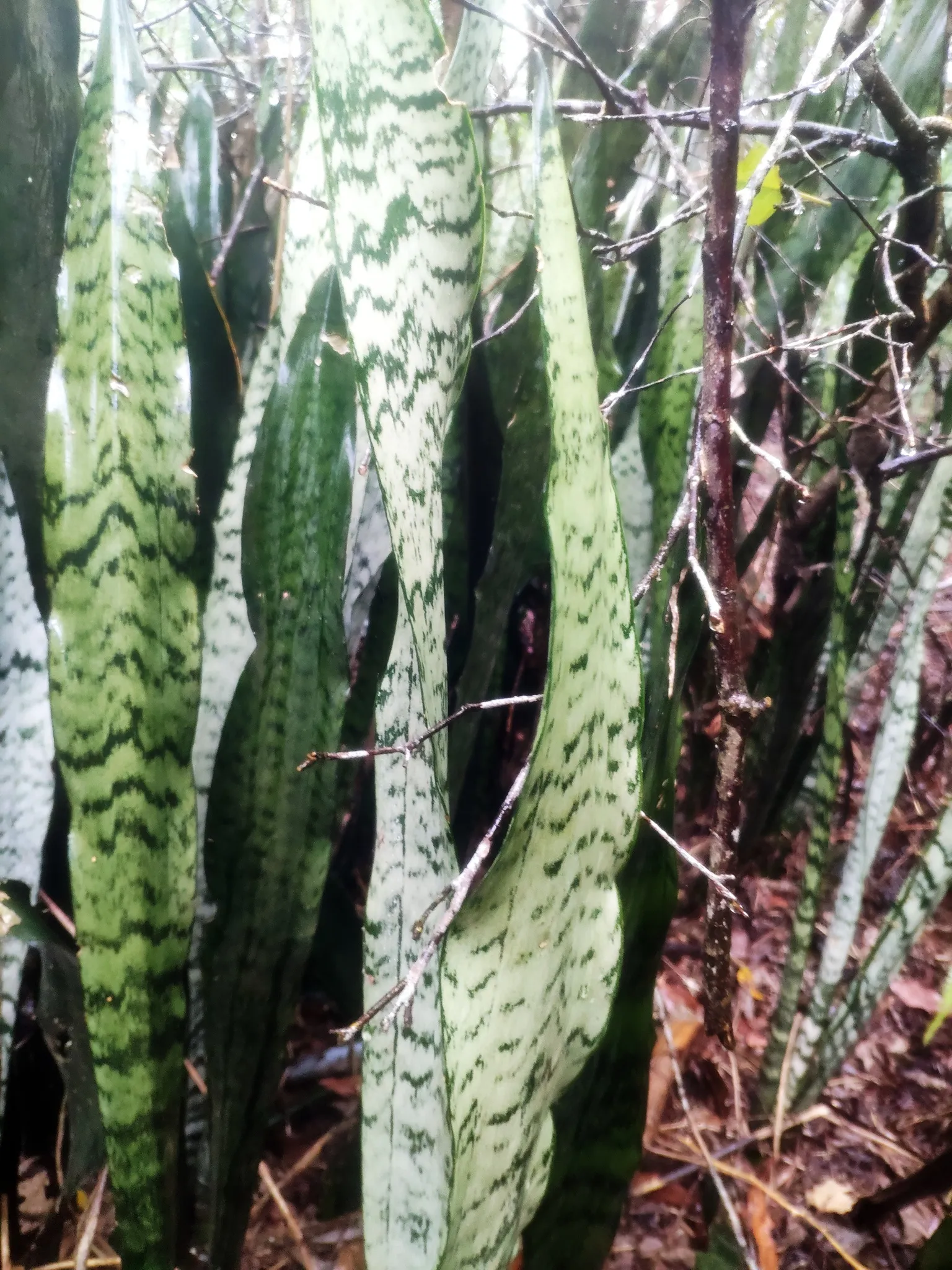
Dracaena trifasciata sends stiff, upright blades straight out of the soil, usually banded in grey-green with yellow edges. It is the plant most often given to people who say they kill everything.
It stores water in its leaves and rhizomes, which explains almost everything about how to treat it.
Light
Dracaena trifasciata grows in almost any light. It does best in bright, indirect light, where it puts out new blades several times a year.
In low light it simply grows more slowly. That is genuinely fine, and it is one of very few plants where a dim hallway is a reasonable home rather than a slow decline.
Too much light
Long hours of direct sun bleach the leaves and can scorch the edges.
Watering
This is the only part that really matters. Dracaena trifasciata is killed by overwatering far more often than anything else.
When to water
Let the soil dry out completely throughout, not just at the surface, then water thoroughly until it runs from the drainage holes.
On average:
- Spring & summer: every 3-4 weeks
- Autumn & winter: every 6-8 weeks
If you are unsure whether to water, wait.
Signs of overwatering
- Blades yellow and go soft at the base
- The plant leans or falls over
- A sour smell from the soil
Signs of underwatering
- Leaves wrinkle or curl slightly along their length
- Tips go brown and dry
Underwatering is easily fixed. Overwatering usually is not.
Humidity and temperature
Humidity is irrelevant to this plant. Dry winter air, heating, air conditioning, none of it causes problems.
Keep it between 15°C and 30°C (59-86°F). Below 10°C (50°F) the leaves develop soft damaged patches.
Soil and repotting
Soil
A gritty cactus mix, or ordinary compost cut heavily with perlite and coarse sand. Dense wet compost around the rhizomes is what causes rot.
Repotting
Every 3 to 4 years is plenty. They are slow, and they flower more readily when snug in a pot.
Use a heavy pot for a tall plant. The blades are top-heavy and a light plastic pot tips over.
Feeding
A half-strength balanced feed twice a year, in spring and midsummer, is generous. This is a plant adapted to poor soil, and overfeeding does more harm than never feeding at all.
Pruning and grooming
Remove damaged blades by cutting them right down at soil level. Do not trim the top off a blade, because it will not regrow a point and the flat cut stays visible for years.
Wipe the leaves occasionally. They collect dust readily and it dulls the banding.
Common problems
Falling over or splaying outward
Usually overwatering softening the base, sometimes a pot that is too small for the height. Check the base of the blades first.
Yellow, mushy base
Rot from overwatering. Cut away every soft section, let the healthy parts dry for a day, and repot into fresh gritty mix.
Brown, dry tips
Underwatering, or minerals from tap water. Neither is serious. Trim the tip at an angle if it bothers you.
Wrinkled leaves
Thirst. Water it and the blades firm up within a day or two.