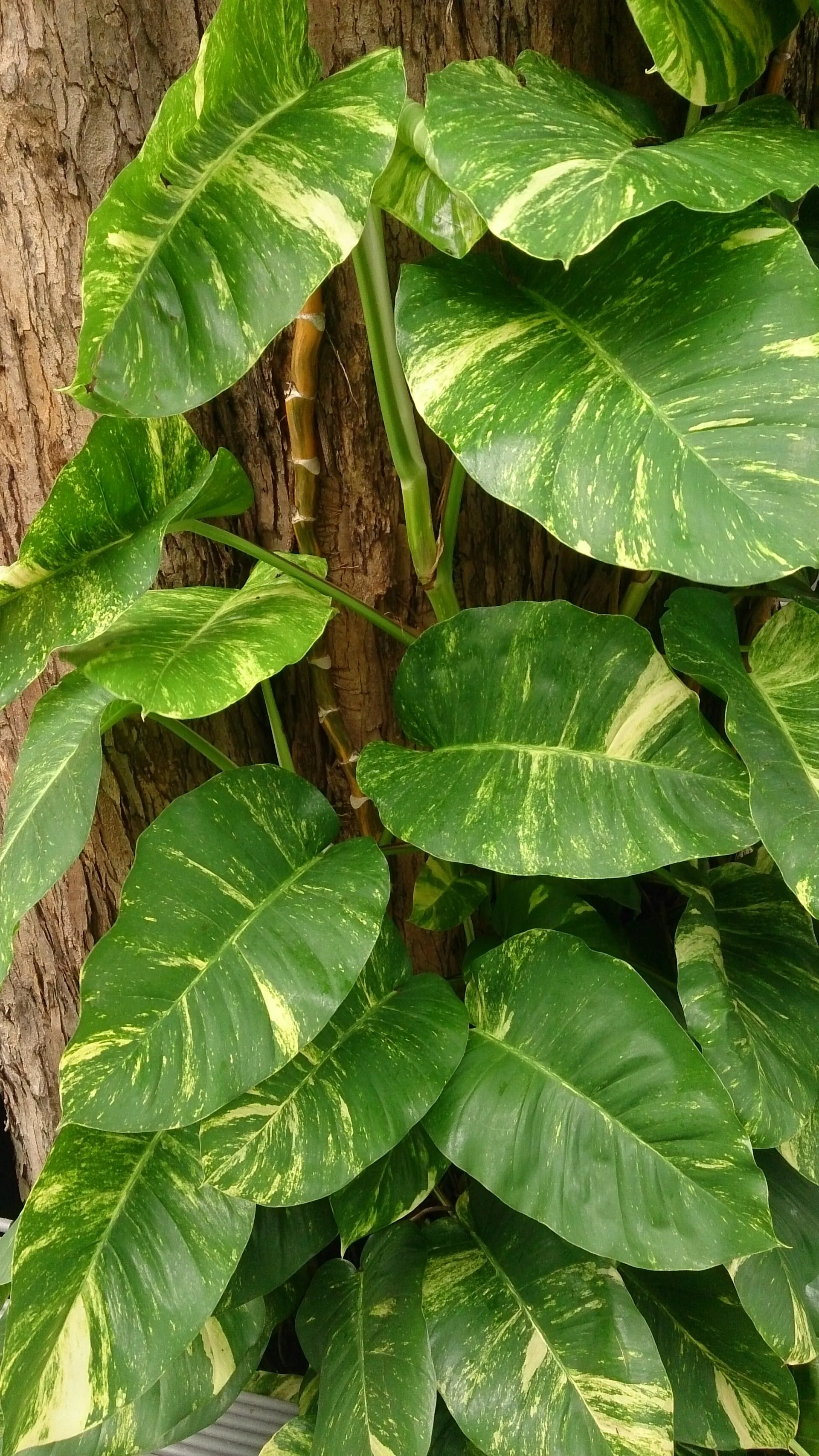
Epipremnum aureum is the plant recommended to every beginner, and for once the common advice is right. Heart-shaped leaves splashed with gold, fast trailing growth, and a tolerance for almost any indoor condition.
Light
Epipremnum aureum grows in low light. Not survives, grows. That range is the reason it gets recommended so often.
It does better in bright, indirect light, where growth is faster and the variegation stronger, so give it the best spot you can spare.
Too much light
Direct sun bleaches and scorches the leaves.
Too little light
New leaves come in solid green, the vines run long, and the gaps between leaves widen.
Watering
Water thoroughly when the top 3-5cm (1-2 inches) of soil is dry, then let it drain fully.
On average:
- Spring & summer: once a week
- Autumn & winter: once every 2-3 weeks
Epipremnum aureum telegraphs thirst better than almost any houseplant. The leaves go limp and slightly soft, then recover fully within hours of watering. Use that rather than a schedule. It is the easiest feedback loop in houseplant care and a genuinely good way to learn.
Signs of overwatering
- Leaves yellow, starting at the base of the vine
- Stems go black near the soil
- Soil stays wet for days
Signs of underwatering
- Leaves go limp and slightly soft
- Leaf edges turn crisp
- Soil pulls away from the pot
Humidity and temperature
Humidity is irrelevant to this plant. Average room air is entirely fine, which is a large part of why it suits beginners.
Keep it between 15°C and 30°C (59-86°F), above 10°C (50°F) in winter, and away from cold draughts.
Soil and repotting
Soil
Ordinary potting compost with a handful of perlite. Nothing specialised is needed.
Repotting
Every couple of years, or when roots come out of the drainage holes. Epipremnum aureum tolerates being pot-bound for a long time, so there is no urgency.
Feeding
A balanced feed every 6 to 8 weeks in spring and summer, or skip it entirely. Pothos grow perfectly well unfed. Nothing in winter.
Pruning and grooming
Epipremnum aureum responds to pruning better than almost anything. Cut a vine back to whatever length you want and it branches from the nodes below the cut, producing a fuller plant rather than a few long bare strands.
Every cutting has a node, roots in water within a fortnight, and can go straight back into the same pot to thicken it up.
Give it something to climb if you want larger leaves. Pothos are climbers, and a plant on a pole produces noticeably bigger foliage than one trailing from a shelf.
Common problems
Leggy vines with sparse leaves
Not enough light. Cut them back hard and move it brighter.
Losing variegation
Same cause. New growth in dim light comes in solid green because the plant cannot afford sections that do not photosynthesise. The old leaves will not change back.
Yellow leaves
Usually overwatering. Pothos would far rather be dry.
Black stems near the soil
Root rot from a pot that stays wet. Take healthy cuttings above the damage and start again.