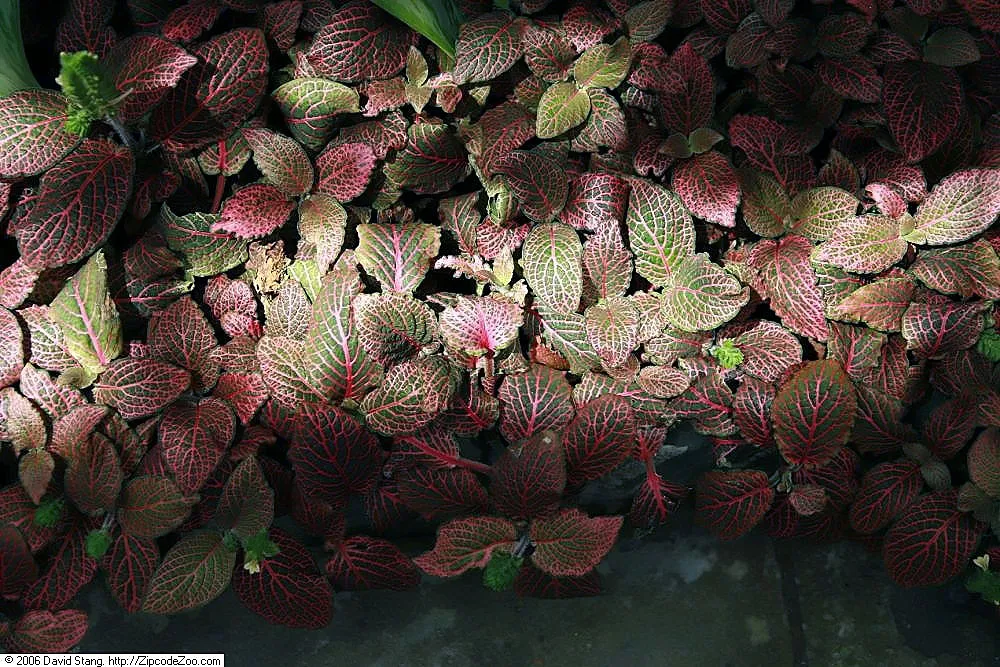
Fittonia albivenis is a small spreading plant with leaves laced in white, pink or red veins. It stays under about 15cm (6in) tall, which is why it turns up in terrariums so often.
It is non-toxic to cats and dogs.
Light
Fittonia albivenis grows best in medium indirect light. It comes from the rainforest floor and has never seen direct sun.
Too much light
Direct sun scorches the thin leaves within days and bleaches the veining.
Too little light
The stems stretch and the plant thins out, though it copes with dim conditions better than most patterned plants.
Watering
Keep the soil lightly moist at all times. Water when the surface starts to feel dry, not when it has dried through.
On average:
- Spring & summer: two or three times a week
- Autumn & winter: once or twice a week
Use filtered or rainwater where you can. Fittonia are sensitive to minerals in tap water.
The fainting
A thirsty Fittonia albivenis collapses completely, going limp and flat as though it has died. Water it and it stands back up within a couple of hours.
It is reversible, but not something to rely on. Each collapse costs the plant some leaves.
Signs of overwatering
- Stems go soft and black at the base
- Leaves yellow and drop
- Soil smells sour
Signs of underwatering
- The whole plant collapses flat
- Leaf edges go crisp and brown
Humidity and temperature
Humidity above 50% is the whole difficulty with this plant, and higher is better. It is why they thrive in a closed terrarium and struggle on an open shelf.
A bathroom with a window works well. Keep it between 18°C and 26°C (65-79°F).
Soil and repotting
Soil
A moisture-retentive mix that still drains. Coco coir or peat with perlite.
Repotting
Every year or two in spring, into a shallow wide pot. The roots are shallow.
Feeding
Quarter-strength balanced fertiliser once a month through spring and summer. Nothing in winter. It is a small plant and burns easily.
Pruning and grooming
Pinch the growing tips out regularly to keep it compact and bushy. Without that it goes leggy and sparse in the middle.
Cuttings root easily in damp compost under a cover.
Common problems
Collapsed flat
Thirst. Water it and it recovers within hours.
Crispy brown leaf edges
Humidity too low, or minerals from tap water.
Black mushy stems
Overwatering. Take cuttings from healthy growth and start again.
Leggy with bare centre
Not enough light, or it needs pinching back.