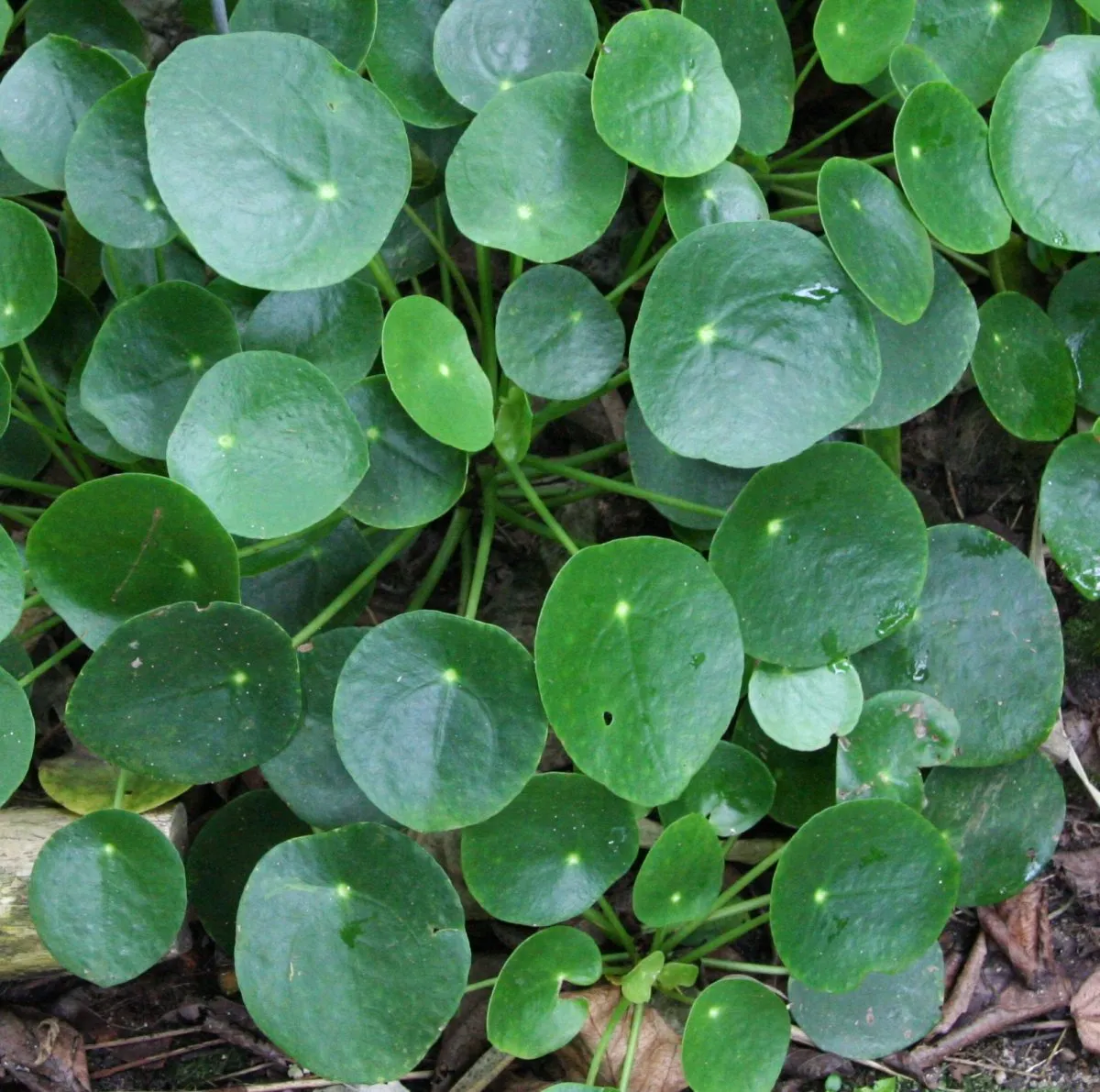
Pilea peperomioides holds round, flat leaves out on long stalks, giving it the look of a miniature tree of green coins.
It spread across Europe through cuttings passed between friends for decades before it reached commercial nurseries, which is why so few people have ever bought one.
Light
Pilea peperomioides grows best in bright, indirect light. That keeps the stalks short and the plant compact.
Too little light
The stalks stretch and the plant becomes leggy and sparse, with leaves spaced far apart.
Too much light
Direct afternoon sun scorches the leaves, leaving pale patches.
Rotate the pot
This plant leans toward the light more strongly than most. Turn the pot a quarter turn each time you water and it will grow evenly instead of lopsided.
Watering
Water when the top 3cm (1 inch) of soil is dry, then let it drain fully.
On average:
- Spring & summer: once a week
- Autumn & winter: once every 2 weeks
The leaves droop noticeably when thirsty and recover within hours, so the plant tells you clearly.
Signs of overwatering
- Lower leaves yellow and drop
- Stem goes soft at soil level
- Soil stays wet for days
Signs of underwatering
- Leaves droop and the stalks go floppy
- Leaf edges curl downward
Humidity and temperature
Ordinary household humidity is fine. Keep it between 15°C and 25°C (59-77°F). It handles a cooler room better than most tropical houseplants.
Soil and repotting
Soil
Standard potting compost with perlite for drainage.
Repotting
Every year or two in spring. This is also the easiest time to remove the plantlets from around the base.
Feeding
Balanced liquid fertiliser once a month through spring and summer. Nothing in winter.
Pruning and grooming
Remove yellowed lower leaves by snapping the stalk off cleanly at the main stem.
An older Pilea naturally loses its lower leaves and develops a bare trunk. Some people prefer that look. If you do not, start again from one of its plantlets.
Free plants
A healthy Pilea peperomioides sends up plantlets from its roots, which push up through the soil around the base of the parent.
Once one has three or four leaves of its own, dig down a couple of centimetres and cut it free with a clean knife, keeping whatever roots come with it. Pot it into a small container of the same compost.
This is the easiest propagation of any houseplant and it works almost every time.
Common problems
Leaning heavily to one side
Growing toward the light. Rotate the pot regularly.
Yellow lower leaves
Normal in small numbers. Several at once means overwatering.
Leggy stalks and sparse leaves
Not enough light.
White crusty spots on the leaves
Mineral deposits from hard water, not a disease. Wipe them off with a damp cloth.