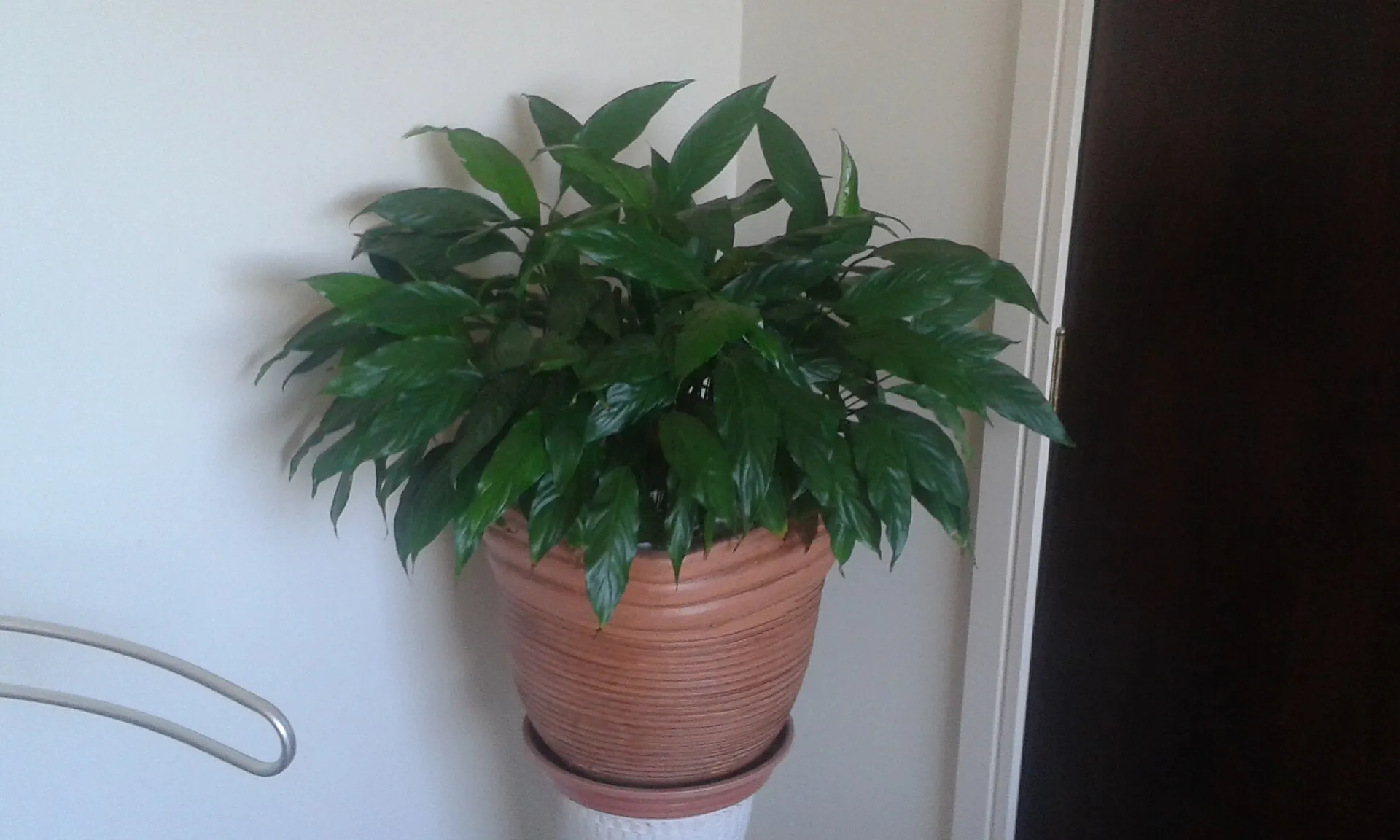
Spathiphyllum wallisii is not a lily. It is an aroid, related to Monstera and Philodendron, and the white sail is a modified leaf wrapped around a spike of tiny real flowers.
It is one of very few houseplants that will flower in an ordinary living room.
Light
Spathiphyllum wallisii grows best in medium to bright indirect light. It tolerates low light, which is why it ends up in offices and hallways, but it will not flower there.
If yours has stopped flowering, light is the first thing to change.
Too much light
Direct sun scorches the leaves, leaving pale bleached streaks.
Watering
Water when the top 2-3cm (1 inch) of soil is dry. Peace Lilies like more moisture than most houseplants and will not tolerate drying out completely.
On average:
- Spring & summer: once or twice a week
- Autumn & winter: once a week
The famous droop
A thirsty Peace Lily collapses over the sides of the pot as though it has died, then stands back up within a few hours of watering.
It is harmless once or twice, but it is not a watering schedule. Each collapse costs the plant leaves over time.
Signs of overwatering
- Leaves yellow from the base upward
- Brown patches with a yellow halo
- Soil stays wet and smells sour
Signs of underwatering
- The whole plant collapses
- Leaf tips go brown and crisp
Humidity and temperature
Humidity above 50% keeps the leaf tips clean. A bathroom with a window suits it well.
Keep it between 18°C and 27°C (65-80°F), away from cold draughts.
Soil and repotting
Soil
Standard potting compost with perlite for drainage.
Repotting
Every 2 years in spring, or when roots fill the pot. Peace Lilies flower better when slightly snug, so do not over-pot.
Repotting is also when to divide. A large clump separates easily into several plants, each with its own roots.
Feeding
Balanced liquid fertiliser every 6 weeks through spring and summer, at half strength. Overfeeding causes brown leaf tips.
Pruning and grooming
Cut spent flower stalks right down at the base once they have faded from white to green to brown. Remove yellowed leaves the same way.
Wipe the leaves occasionally. They are broad and collect dust quickly.
Common problems
Brown leaf tips
Usually minerals in tap water, or overfeeding. Switch to filtered water and flush the pot through with plain water.
No flowers
Not enough light, or the plant is too young. Give it brighter indirect light and be patient.
Yellow leaves
Overwatering if several go at once. The occasional old leaf yellowing at the base is normal.
Green flowers
Natural ageing, not a problem. Cut the stalk down.