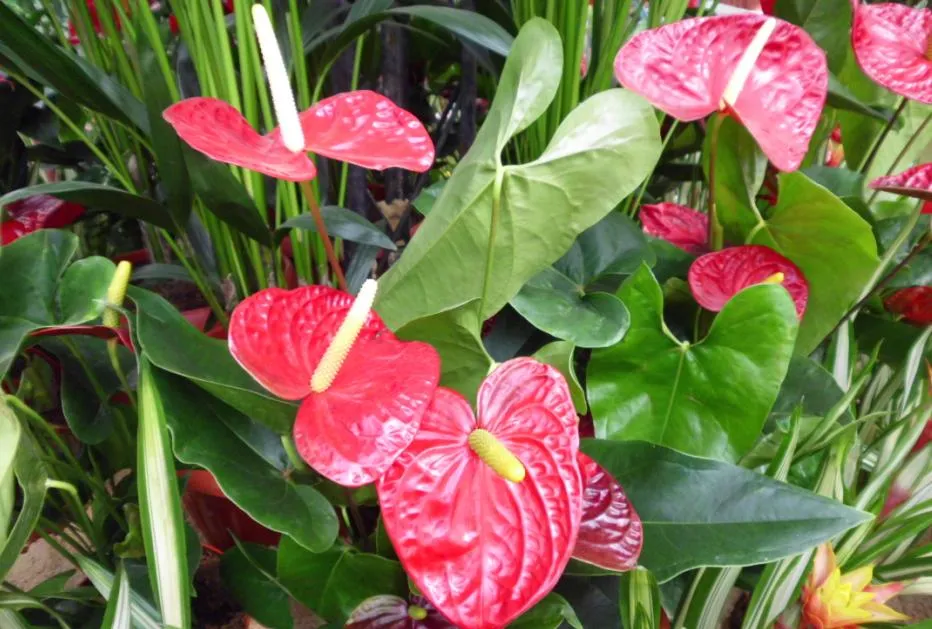
Anthurium andraeanum produces waxy, brightly coloured spathes that last for weeks or months. The coloured part is a modified leaf, and the real flowers are the tiny bumps along the spike in the middle.
It is an epiphyte, growing on trees rather than in soil, and that is the key to everything below.
Light
Anthurium andraeanum grows best in bright, indirect light. This is the single biggest factor in whether it keeps flowering.
The plant will survive happily in medium light and simply stop producing new spathes. If yours has stopped flowering, move it brighter before changing anything else.
Too much light
Direct sun scorches the leaves and fades the spathes.
Watering
Water when the top 3cm (1 inch) of the mix is dry, then let it drain completely.
On average:
- Spring & summer: once a week
- Autumn & winter: once every 2 weeks
Signs of overwatering
- Leaves yellow from the base
- Stems go soft at soil level
- Roots turn brown and mushy
Signs of underwatering
- Leaves curl and go limp
- Leaf edges turn crisp
- Flowers fade early
Humidity and temperature
Humidity above 50% keeps the leaves and spathes in good condition. Below that the leaf tips brown.
Keep it between 18°C and 27°C (65-80°F), away from draughts.
Soil and repotting
Soil
This matters more than for most houseplants. Anthurium andraeanum needs a very chunky mix, at least half orchid bark, with perlite and a little compost.
Standard potting compost suffocates the roots and is the most common reason these plants decline slowly.
Repotting
Every 2 years in spring. Anthurium roots like air around them, so do not pack the mix down.
Feeding
A high-phosphorus fertiliser every 6 weeks through spring and summer encourages flowering. A general-purpose feed high in nitrogen produces leaves at the expense of flowers.
Nothing in winter.
Pruning and grooming
Cut spent flower stalks right down at the base once the spathe fades and browns.
Remove yellowed leaves the same way. Wipe the leaves occasionally to keep them glossy.
Common problems
No new flowers
Not enough light, then the wrong fertiliser. In that order.
Green flowers
Too little light, or too much nitrogen.
Brown leaf tips
Low humidity, or minerals from tap water.
Yellow leaves
Overwatering, or a mix that is too dense and holding water around the roots.