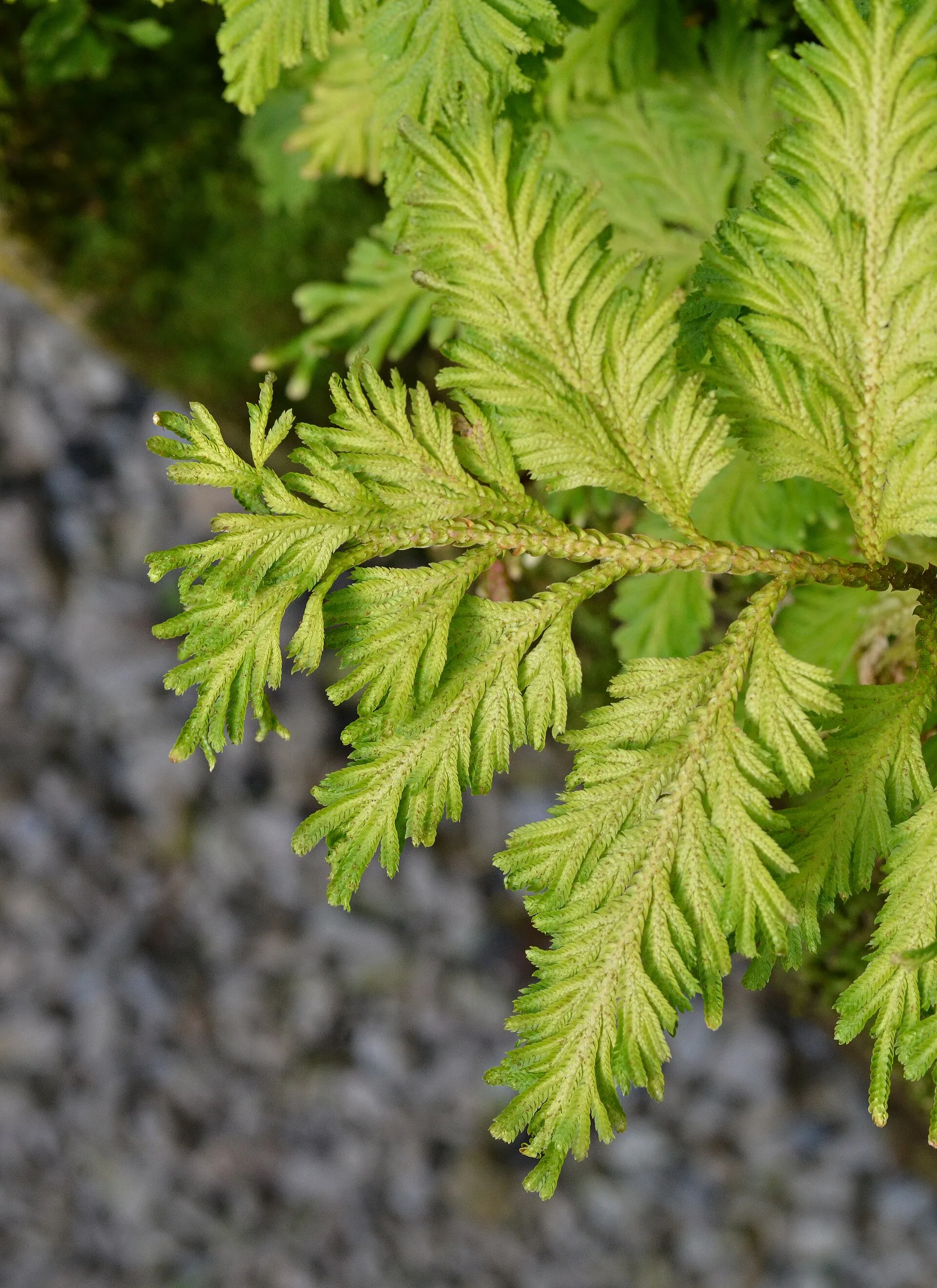
Asplenium nidus looks nothing like the fern most people picture. Instead of finely divided fronds it has broad, solid, glossy leaves that unfurl from a central rosette, giving it the nest shape in the name.
It is an epiphyte, growing in the crooks of trees, and it is considerably easier than a Boston Fern.
Light
Asplenium nidus grows best in medium indirect light.
Too much light
Direct sun scorches the fronds badly, leaving pale bleached patches that do not recover.
Too little light
Growth slows and new fronds come in smaller, but it tolerates dim conditions better than most ferns.
Watering
Water when the top 2-3cm (1 inch) of soil is dry, keeping the mix lightly moist but never soggy.
On average:
- Spring & summer: once or twice a week
- Autumn & winter: once a week
Do not water into the nest
Water the soil around the edge of the pot, not the centre of the rosette. Water sitting in the crown rots it, and that is the main way these plants are killed.
Signs of overwatering
- Crown goes soft, brown or black
- Fronds yellow from the base
- Soil smells sour
Signs of underwatering
- Frond edges go crisp and brown
- Fronds look dull and slightly limp
Humidity and temperature
Humidity around 50% suits it, which is achievable in a normal room. This is what makes it easier than a Boston Fern.
Keep it between 18°C and 27°C (65-80°F), away from cold draughts.
Soil and repotting
Soil
A moisture-retentive but airy mix, with bark and perlite. As an epiphyte it dislikes dense compost.
Repotting
Every 2 to 3 years in spring. It grows slowly and is happy snug.
Feeding
Half-strength balanced fertiliser every 6 to 8 weeks in spring and summer. Nothing in winter. Ferns burn easily.
Pruning and grooming
Remove whole fronds at the base once they brown. Do not trim partway along a frond, because it will not fill back in.
Handle new fronds carefully as they unfurl from the centre. Bruised ones stay marked for the life of the leaf, which can be years.
Wipe the broad fronds occasionally to keep them glossy.
Common problems
Brown crispy frond edges
Dry air, or minerals from tap water. Not usually serious.
Soft brown centre
Water sitting in the rosette. Stop watering into the middle. Damage to the crown is often fatal.
Pale, bleached fronds
Too much light.
Rippled or crinkled new growth
Normal for this species. The fronds flatten out as they mature.