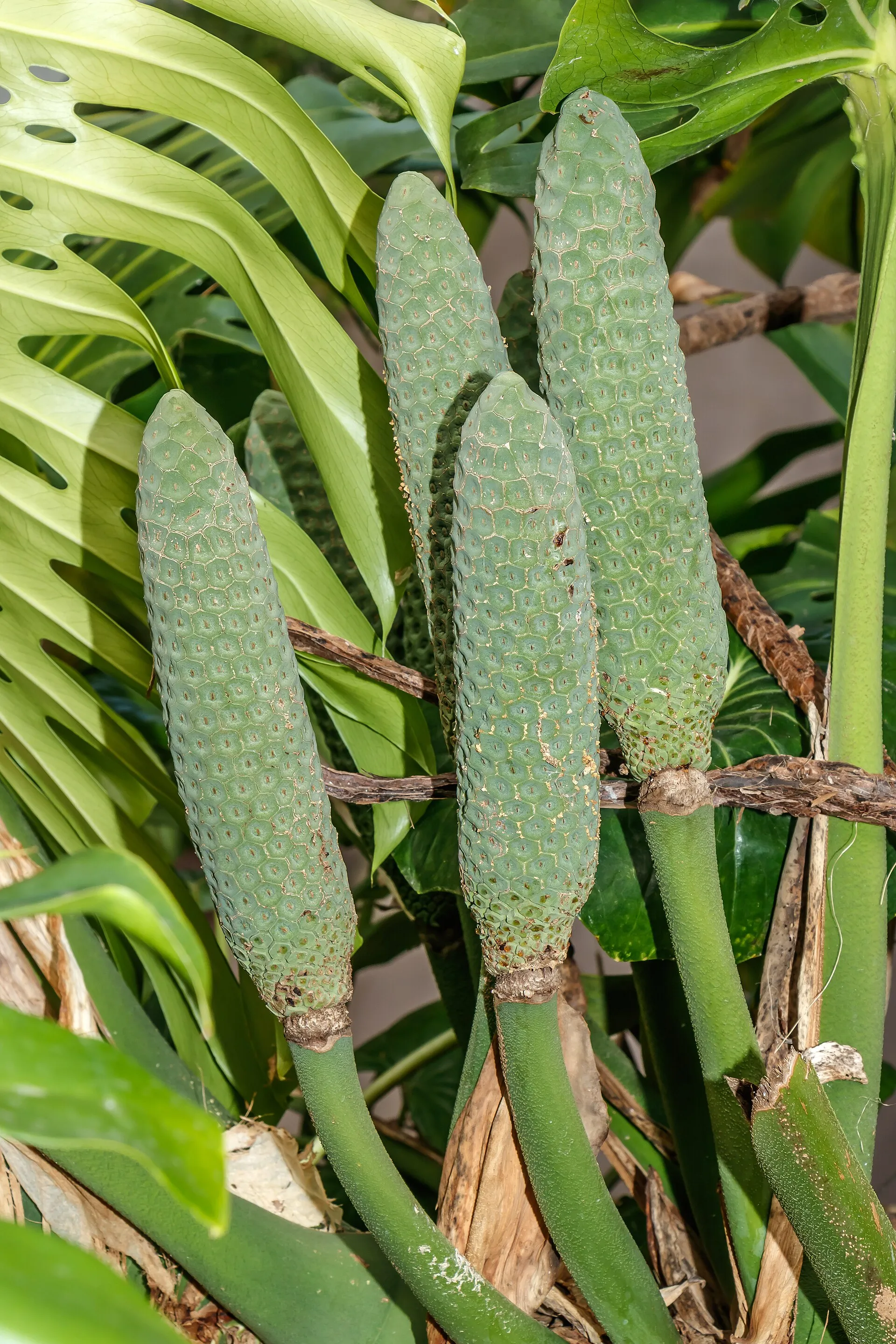
Monstera deliciosa is the plant most people picture when they think of a houseplant. It is genuinely easy to keep alive, and genuinely difficult to grow into the architectural specimen you see in photographs.
The difference between the two comes down to light and support.
Light
Monstera deliciosa grows best in bright, indirect light. It survives medium light happily, but stays juvenile there, with smaller leaves and no holes.
If you want fenestration, give it the brightest spot that does not include hours of direct afternoon sun.
Too little light
Small leaves, no holes, long gaps between leaves, and the whole plant leaning hard toward the window.
Too much light
Bleached patches and dry brown burns in the middle of leaves facing the glass.
Rotate the pot
Turn it a quarter turn every couple of weeks so it grows evenly rather than reaching in one direction.
Watering
Monstera deliciosa is forgiving here. Water thoroughly when the top 5cm (2 inches) of soil is dry, let the excess drain away, then wait.
On average:
- Spring & summer: once a week
- Autumn & winter: once every 2 weeks
It recovers from underwatering far more readily than from a pot that never dries out.
Signs of overwatering
- Leaves yellow, starting with the lowest
- Stems soften near the soil
- Soil stays wet for days
Signs of underwatering
- Leaves droop and go slightly limp
- Leaf edges turn crisp and brown
- Soil pulls away from the sides of the pot
Drooping leaves recover within hours of watering.
Humidity and temperature
Average household humidity is fine, which is unusual for an aroid this size. Higher humidity produces larger leaves and healthier aerial roots, but nothing bad happens at 40%.
Keep it between 18°C and 30°C (65-86°F), and above 15°C (59°F) in winter. Keep it away from cold draughts.
Soil and repotting
Soil
A well-draining mix with bark and perlite is ideal, though Monstera deliciosa tolerates ordinary potting compost better than most aroids.
Repotting
Every year or two in spring. It grows fast and fills a pot quickly.
Bury the aerial roots nearest the soil when you repot. They will take up water and help anchor the plant.
Support and climbing
This is the step most people skip, and the one that changes everything.
In the wild Monstera deliciosa climbs tree trunks, and aerial roots gripping a rough vertical surface is the cue that triggers mature growth. A moss pole, coir pole or timber plank can change leaf size dramatically within a single season.
A Monstera sprawling sideways across a shelf will stay juvenile for years, however bright the room.
Tie new growth loosely to the support, and keep the pole damp so the aerial roots attach to it.
Feeding
Balanced liquid fertiliser once a month through spring and summer, at full or half strength. Nothing in winter.
Monstera deliciosa is a heavy feeder by houseplant standards and responds visibly to regular feeding through the growing season.
Pruning and grooming
Prune to control size or remove damaged leaves, cutting just above a node. That is where new growth comes from, and the piece you remove will root readily.
Do not cut the aerial roots off. They are not untidy growth, they are how the plant feeds and anchors itself. Tuck them into the pole or the soil instead.
Wipe the leaves regularly. They are large, they collect dust faster than any other houseplant, and it measurably reduces the light reaching them.
Common problems
No fenestrations
Not enough light, or the plant is still juvenile. Both are fixed by a brighter position and something to climb.
Yellow leaves
Overwatering, most of the time. Check the pot drains and is not standing in water.
Brown crispy patches mid-leaf
Sunburn from direct exposure.
Brown leaf edges with yellowing
Usually underwatering, or very dry air over a long period.
Leggy growth with long gaps between leaves
Too little light.