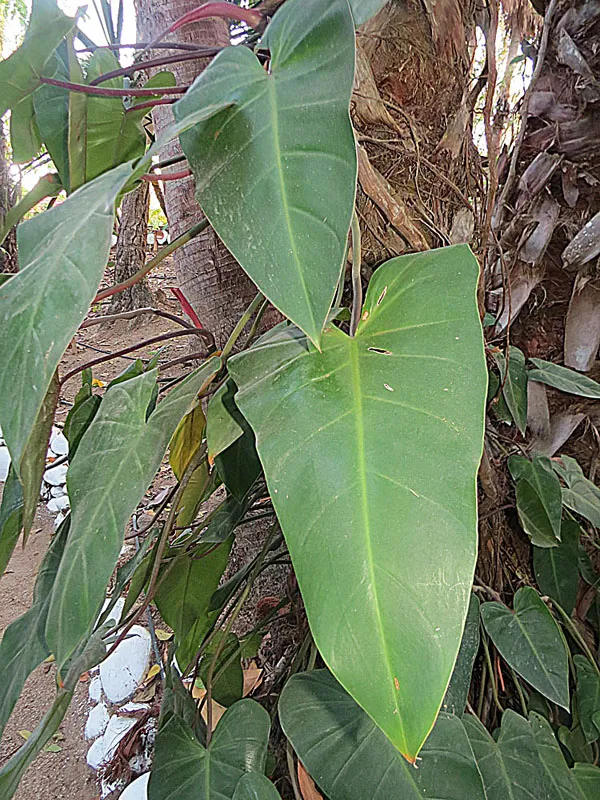
Philodendron hederaceum is the plant most often recommended to people who think they cannot keep plants alive. Heart-shaped glossy leaves, fast trailing growth, and a tolerance for almost any indoor condition.
Light
Philodendron hederaceum grows best in bright, indirect light, but it will grow in medium light and survive in low light too. That range is unusual and it is the main reason it is so widely recommended.
Too little light
The vines run long with wide gaps between the leaves, and the new leaves come in smaller than the old ones. Cut the vine back and move it brighter.
Watering
Water when the top 3-5cm (1-2 inches) of soil feels dry. This plant is far more tolerant of being too dry than too wet.
When to water
There is no fixed schedule, and it depends on light and season.
On average:
- Spring & summer: once a week
- Autumn & winter: once every 2-3 weeks
Signs of overwatering
- Leaves turn yellow, starting at the base
- Stems go soft near the soil
- Soil stays wet for days
Signs of underwatering
- Leaves droop and go slightly limp
- Leaf edges turn crisp
- Soil pulls away from the sides of the pot
Humidity and temperature
Average household humidity is fine. This is one of the few tropical plants that genuinely does not need help here.
Keep it between 18°C and 27°C (65-80°F), and above 12°C (54°F) in winter.
Soil and repotting
Soil
Ordinary potting compost with a handful of perlite for drainage works well. Nothing specialised is needed.
Repotting
Repot every couple of years in spring, or when roots come out of the drainage holes. Go up one pot size.
Feeding
Use a balanced liquid fertiliser once a month through spring and summer, at full or half strength. Stop in autumn and winter.
Pruning and grooming
Philodendron hederaceum responds well to being cut back. Trim any vine just above a leaf and it will branch below the cut, which makes the plant fuller rather than longer.
Every piece you cut off has a node and will root in water within a couple of weeks. Most people pot the cuttings back into the same pot to thicken it up.
Common problems
Yellow leaves
The occasional yellow leaf at the base is normal. Several at once usually means overwatering.
Let the soil dry out further before watering again, and check the pot drains properly.
Long bare vines
Not enough light. Move it to a brighter spot and cut the bare vines back to encourage new growth from lower down.
Brown crispy leaf tips
Usually underwatering, or very dry air over a long period.