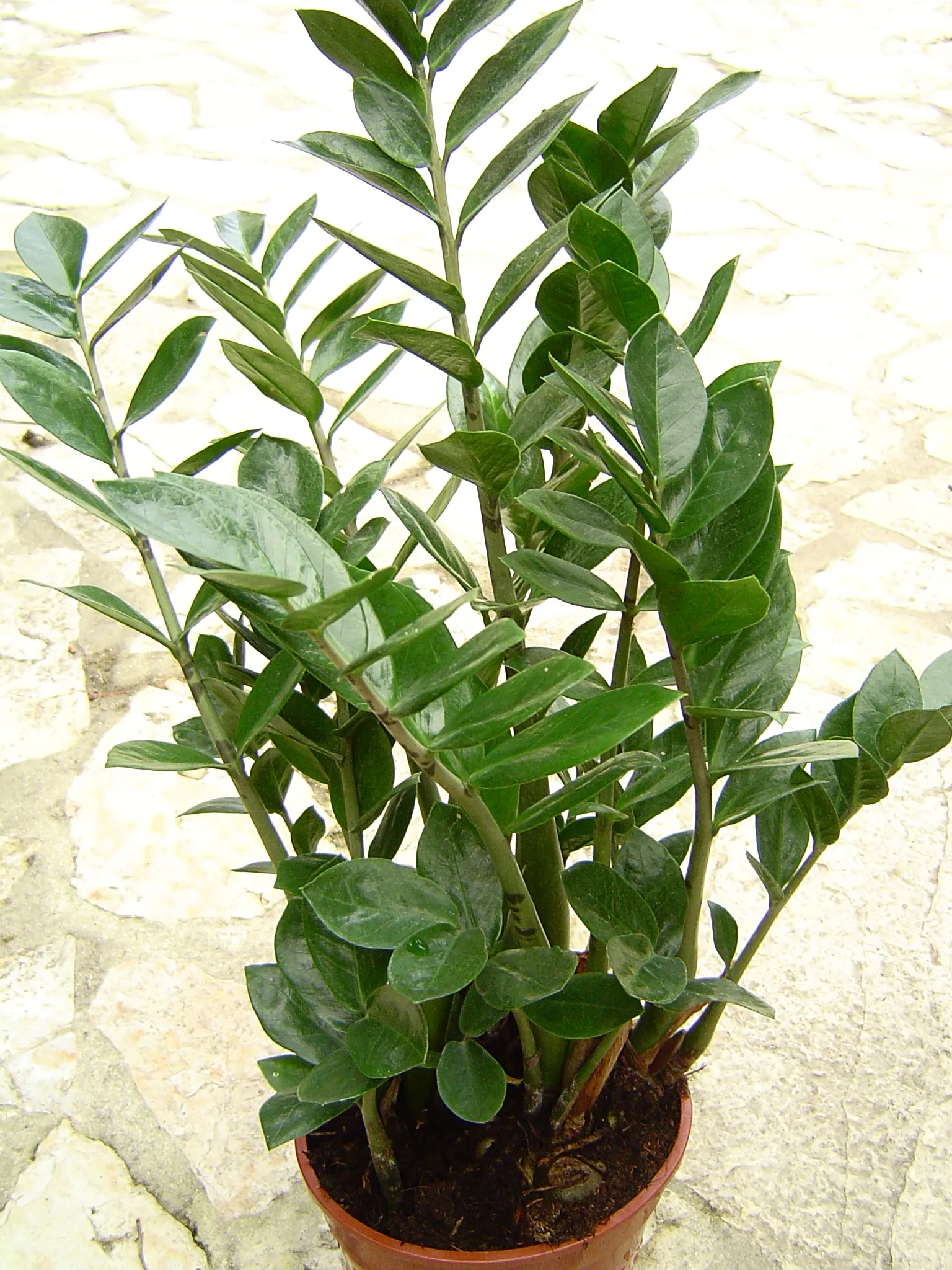
Zamioculcas zamiifolia stores water in potato-like rhizomes under the soil. That is why it goes a month between waterings, and why overwatering is the only realistic way to kill one.
Light
Zamioculcas zamiifolia grows in low light. Genuinely, not as a slow decline. A dim hallway is a legitimate home for one.
It grows faster in bright, indirect light and produces new stems more often, so give it better light if you have it spare.
Too much light
Direct sun scorches the waxy leaflets.
Watering
Less than you think, and less often than any other plant you own.
Let the soil dry through completely, water thoroughly until it runs from the drainage holes, then leave it alone.
On average:
- Spring & summer: every 3-4 weeks
- Autumn & winter: every 6-8 weeks
If you are unsure whether to water, don't.
Signs of overwatering
- Stems yellow and go soft at the base
- A sour smell from the soil
- Stems falling outward from the centre
Signs of underwatering
- Leaflets wrinkle and go slightly dull
- Stems bend rather than standing upright
Wrinkled leaflets plump back up within a day of watering. Soft yellow stems do not recover.
Humidity and temperature
Humidity is irrelevant. Dry winter air, heating, air conditioning, none of it bothers a ZZ plant.
Keep it between 15°C and 30°C (59-86°F), and above 10°C (50°F).
Soil and repotting
Soil
Free-draining above all else. A cactus mix, or ordinary compost cut heavily with perlite. Dense wet compost around the rhizomes is the classic way to lose one.
Repotting
Every 2 or 3 years at most. It is slow, and untroubled by a snug pot.
Use a heavy pot if the plant is tall. The top growth can outweigh the base and tip a light plastic pot over.
Feeding
A half-strength balanced feed twice a year, in spring and midsummer, is generous. This is a plant adapted to poor soil and seasonal drought, and overfeeding does more harm than skipping it.
Pruning and grooming
Remove whole stems at soil level when they yellow, rather than trimming individual leaflets. Wear gloves, because the sap irritates skin.
Wipe the leaves occasionally. The waxy coating shines up well and it is the only grooming a ZZ ever asks for.
Dormancy
In low light and cool temperatures growth stops completely for months at a time. This is normal and needs no intervention beyond watering even less than usual.
Common problems
Yellowing, soft stems at the base
Overwatering and rhizome rot. This is the one thing that kills ZZ plants, and it is almost always kindness rather than neglect.
Wrinkled, dull leaflets
Underwatered, and completely reversible. Water it and it plumps back up within a day.
No new growth
Normal. A new stem every few months is a healthy rate.
Leaning, splaying stems
Too little light, or a pot too small for the top growth.