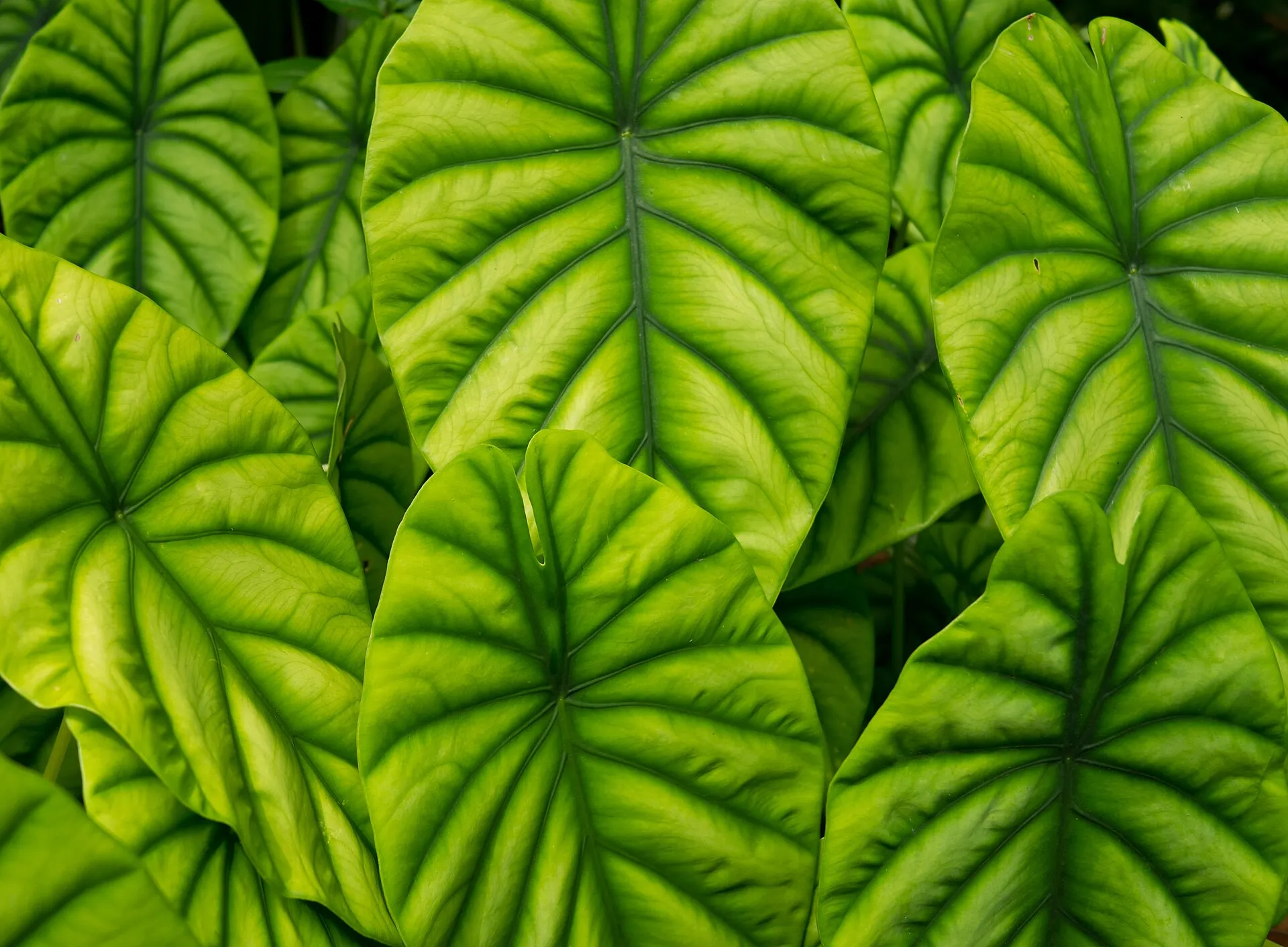
Alocasia cuprea has thick, puckered oval leaves with a metallic sheen, in copper, bronze or deep green depending on the light. The undersides are dark purple.
The surface genuinely reflects, which is where the Mirror Plant name comes from.
Light
Alocasia cuprea grows best in medium to bright indirect light. The metallic sheen is at its strongest in good indirect light and disappears in both extremes.
Too much light
Direct sun bleaches the surface and the metallic quality goes flat and dull.
Too little light
The colour dulls to plain green and growth stops.
Watering
Water when the top 3cm (1 inch) is dry. The corm is small relative to the leaves and rots quickly.
On average:
- Spring & summer: once a week
- Autumn & winter: once every 2-3 weeks
Signs of overwatering
- Leaves yellow and drop suddenly
- Stalks soften at soil level
- Soil stays wet for days
Signs of underwatering
- Leaves droop and stalks bend
- Leaf edges curl inward
Humidity and temperature
Humidity of 60% or above, and higher is better. Alocasia cuprea is a cabinet plant for most people.
Keep it between 18°C and 27°C (65-80°F).
Soil and repotting
Soil
Very free-draining, heavy on bark and perlite. Pure sphagnum or semi-hydro works well and many growers prefer it for this species.
Repotting
Rarely, and only in spring.
Feeding
Quarter-strength balanced fertiliser once a month through spring and summer. Nothing in winter.
Pruning and grooming
Remove fully yellowed leaves at the base.
The puckered surface holds dust in its dips. Brush gently with a soft dry brush rather than wiping, which can mark the sheen.
Dormancy
It drops leaves readily in cold or low light. Keep barely damp and warm, and check the corm is firm before giving up.
Common problems
Loss of metallic sheen
Too much direct light, or too little light overall. Check where the plant sits.
Sudden leaf loss
Dormancy or overwatering.
Crispy edges
Humidity too low.
Spider mites
Common. Check the purple undersides, where they are easiest to spot.