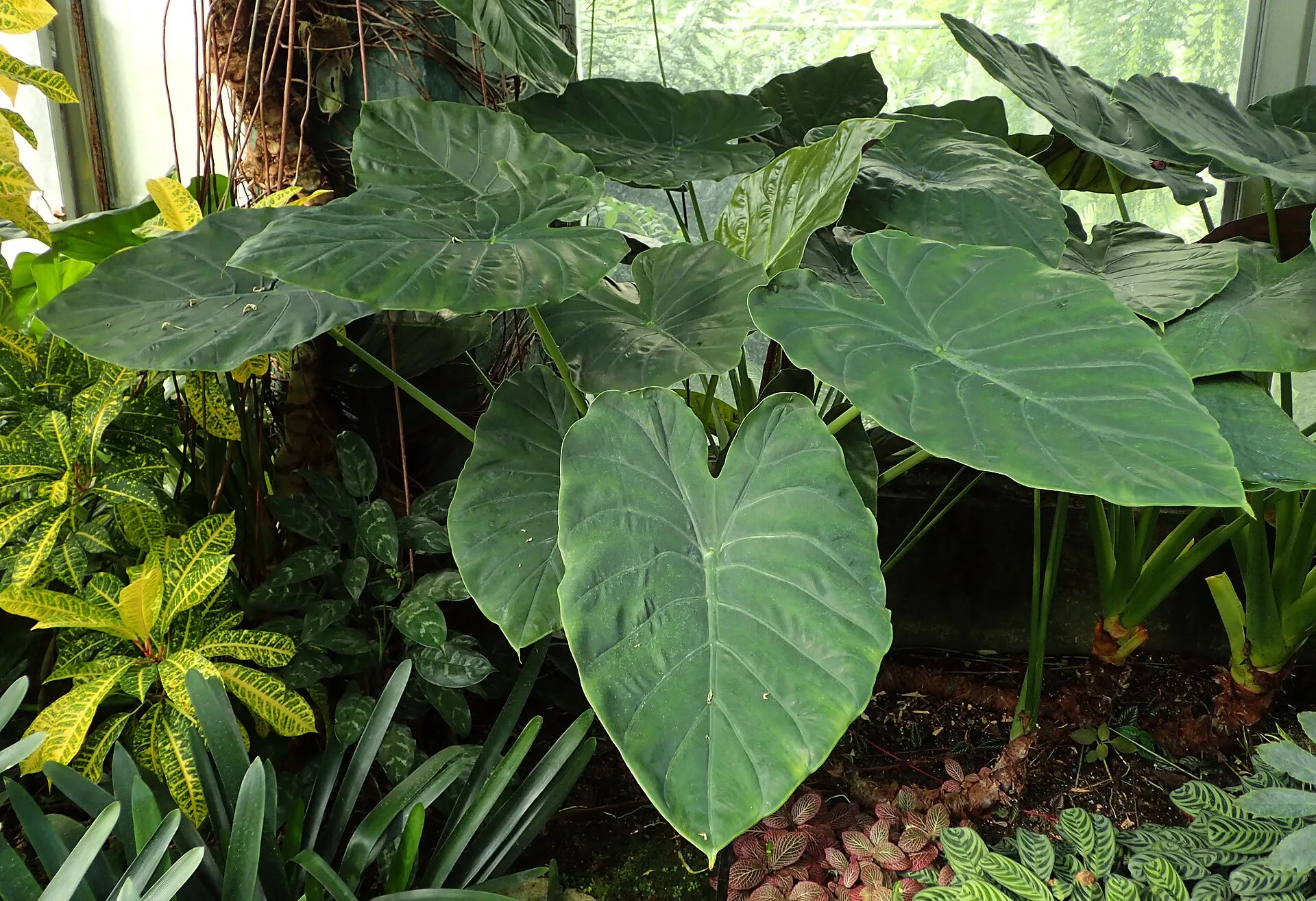
Alocasia wentii has large, thick, leathery leaves in deep green with bronze-purple undersides, held upright on sturdy stems.
It is the most forgiving Alocasia in general cultivation. The leaves are thicker than the rest of the genus, and it tolerates dry air and irregular watering that would finish a Zebrina or a Frydek.
Light
Alocasia wentii grows best in bright, indirect light and handles more of it than most Alocasia. A couple of hours of gentle morning sun is fine.
Too much light
Hot afternoon sun bleaches the leaf surface.
Too little light
Stalks stretch and lean, and new leaves come in smaller.
Watering
Water when the top 3-5cm (1-2 inches) of soil is dry, then let it drain fully.
On average:
- Spring & summer: twice a week
- Autumn & winter: once a week
Signs of overwatering
- Leaves yellow from the oldest inward
- Stalks soften at the base
- Soil stays wet for days
Signs of underwatering
- Leaves droop and stalks bend
- Leaf edges go crisp
Humidity and temperature
Average household humidity is workable, which is unusual for this genus. Above 50% is better but not essential.
Keep it between 15°C and 29°C (59-84°F). It handles cooler temperatures than most Alocasia before going dormant.
Soil and repotting
Soil
A free-draining aroid mix of bark, perlite and coco coir.
Repotting
Every spring while it is growing quickly. It puts on size faster than most Alocasia and fills a pot.
Feeding
Balanced liquid fertiliser every 3 to 4 weeks through spring and summer. It is a faster grower than most of the genus and takes more feeding.
Nothing in autumn and winter.
Pruning and grooming
Remove leaves at the base once they yellow fully. The plant sheds older leaves as it produces new ones, so some loss is normal.
Wipe the large leaves occasionally with a damp cloth. Unlike the velvet Alocasia, these are glossy and take it well.
Dormancy
It can still go dormant in a cold or dark winter, though less readily than the rest of the genus. Keep it barely damp and warm and wait for spring.
Common problems
Yellowing lower leaves
Normal in small numbers. Several at once means overwatering.
Drooping leaves
Usually thirst. It recovers within hours of watering.
Crispy leaf edges
Humidity low, though this species tolerates it better than most.
Spider mites
Less prone than the velvet-leaved Alocasia, but still worth checking.