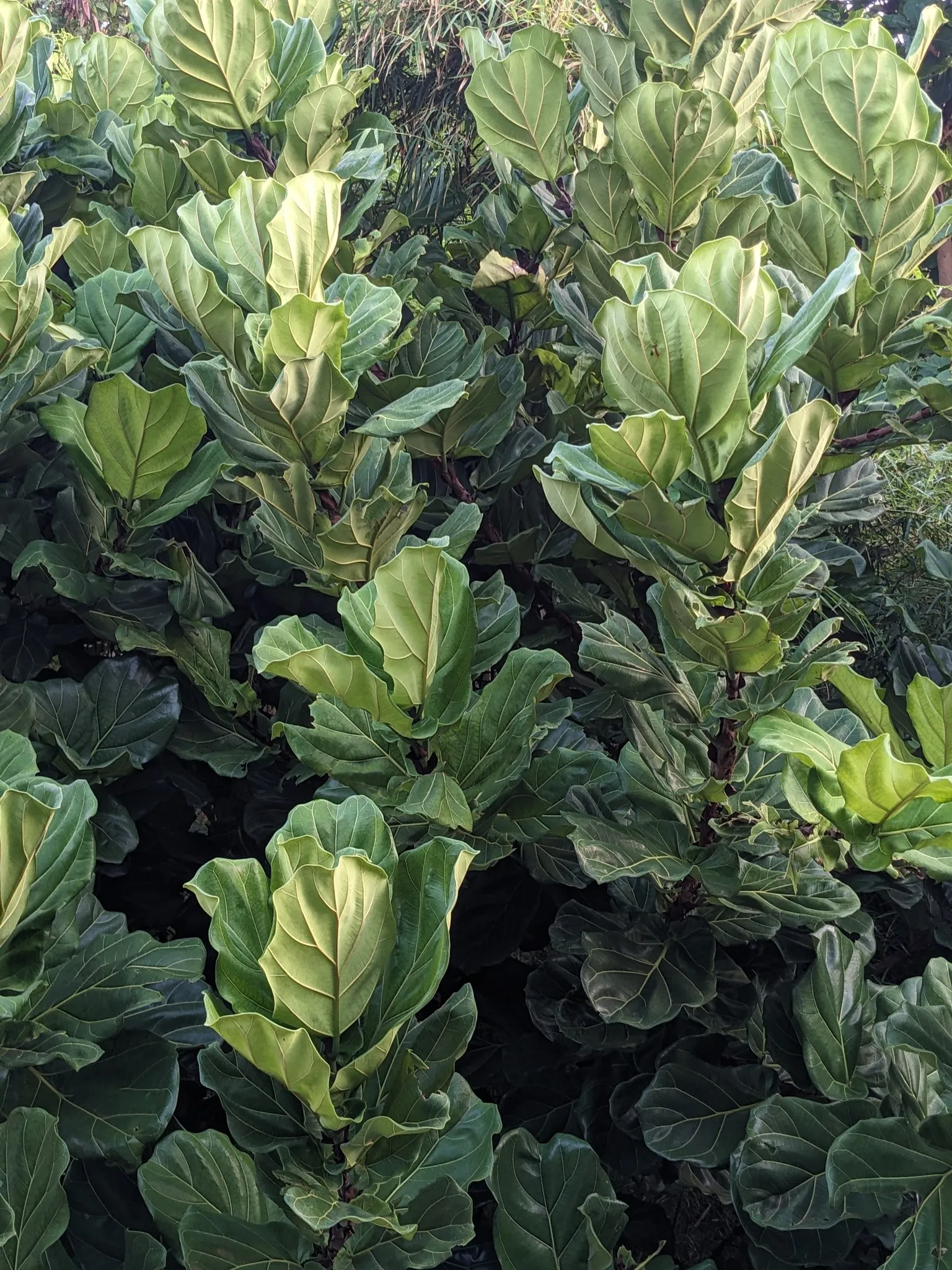
Ficus lyrata grows large, leathery, violin-shaped leaves on an upright stem. A mature one is a genuine indoor tree.
It has a reputation for being difficult. That is not quite right. It is not fussy about care so much as intolerant of change.
Light
Ficus lyrata grows best in bright, indirect light, and it wants as much as you can give it. A spot right beside a bright window is usually better than one across the room. A couple of hours of gentle morning sun does no harm.
Too little light
New leaves come in noticeably smaller, growth slows to nothing, and lower leaves drop.
Too much light
Bleached pale patches in the middle of leaves that face the window.
Watering
Water thoroughly when the top 5cm (2 inches) of soil is dry, until water runs from the drainage holes. Then let it drain completely and do not water again until the top has dried out.
On average:
- Spring & summer: once a week
- Autumn & winter: once every 2-3 weeks
Consistency matters more than frequency here. Irregular watering is one of the main triggers for leaf drop.
Signs of overwatering
- Dark brown spots spreading inward from the leaf edge
- Lower leaves yellowing and dropping
- Soil staying wet for days
Signs of underwatering
- Leaf edges going dry and crisp
- Leaves curling and looking dull
- Soil pulling away from the sides of the pot
It hates being moved
This is the thing to understand about Ficus lyrata. It grows each leaf for the exact light it is in, and it cannot adjust those leaves afterwards.
Move it to another room, turn the pot around, or put it near a draught, and it responds by dropping leaves. So does a change in watering routine.
Find a bright spot away from doors, radiators and air conditioning, and leave it there. If you must move it, expect some leaf loss and do not panic.
Humidity and temperature
Average household humidity is acceptable, though above 50% keeps the leaf edges cleaner.
Keep it between 18°C and 27°C (65-80°F). Cold draughts are one of the most reliable ways to make it drop leaves.
Soil and repotting
Soil
Well-draining compost with bark and perlite mixed in.
Repotting
Every 2 years in spring, going up one pot size. Repotting is itself a change, so expect a sulk afterwards.
Feeding
Balanced liquid fertiliser once a month through spring and summer. Nothing in autumn and winter.
Pruning and grooming
Cut the main stem at the height you want branching to start, just above a leaf node. The plant will push out several new branches below the cut, which is how you get a tree shape rather than a single pole.
Wear gloves. The white sap irritates skin.
Wipe the large leaves regularly. They collect dust faster than almost any other houseplant and it measurably cuts the light they receive.
Common problems
Sudden leaf drop
A change in conditions. See above. Restore what changed if you can, and otherwise leave it alone.
Brown spots spreading from the edges
Overwatering and root rot. Check the roots, cut away anything mushy, and repot into fresh mix.
Brown crispy edges only
Underwatering or dry air. Less serious.
Bare lower stem
Normal as it grows into a tree, or a sign of too little light if it is happening fast.