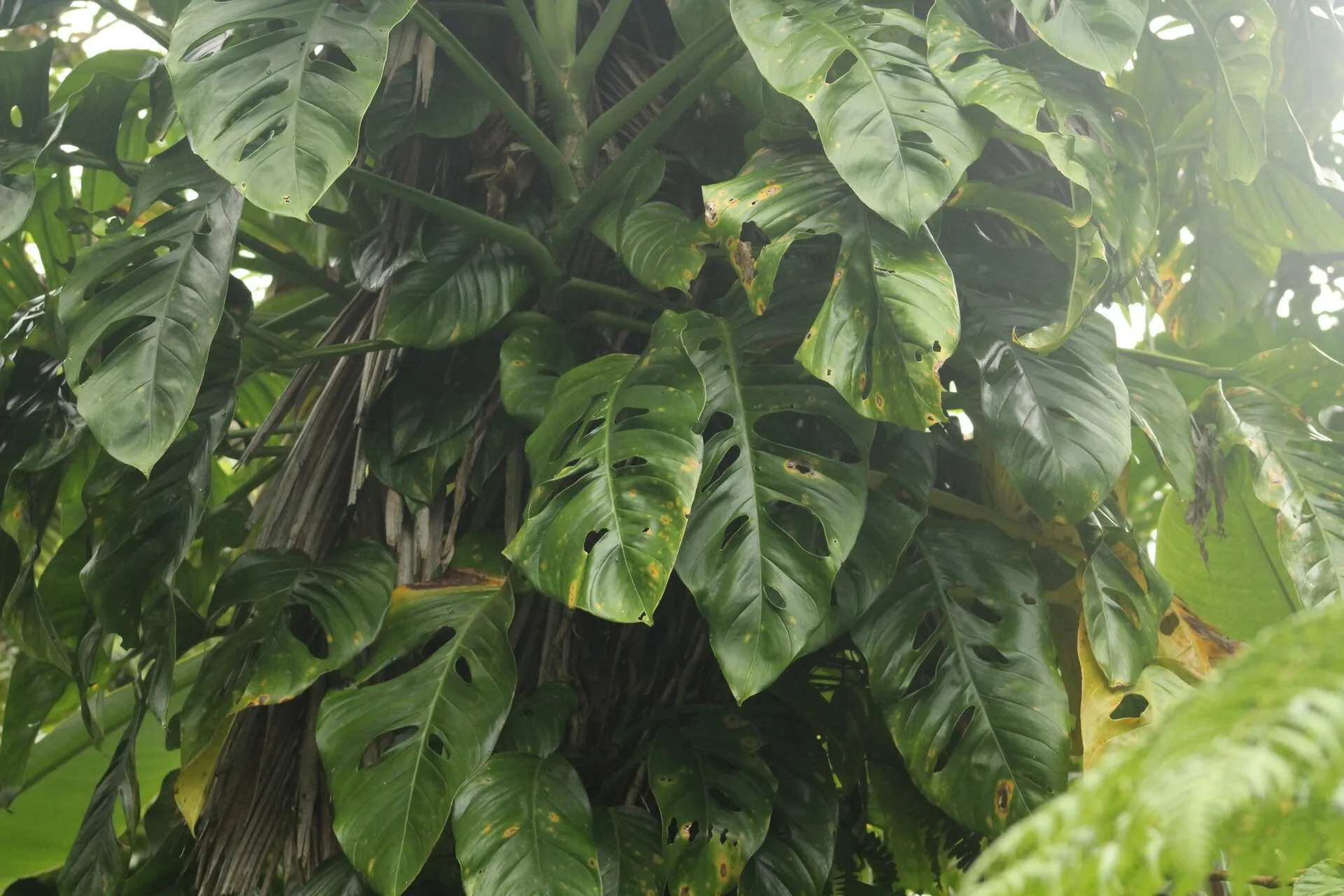
Monstera adansonii is the trailing Monstera, with oval leaves punched through with holes. Unlike Monstera deliciosa it fenestrates from a young age, so even a small plant looks the part.
Light
Monstera adansonii grows best in bright, indirect light. More light means larger leaves with more holes.
Too little light
Small leaves with few or no holes, and long stretches of bare vine between them.
Too much light
Direct sun scorches the thin leaves, leaving bleached patches.
Watering
Water when the top 3-4cm (1-1.5 inches) of soil is dry. The leaves are thin and this plant dries out faster than a deliciosa.
On average:
- Spring & summer: once or twice a week
- Autumn & winter: once every 1-2 weeks
Signs of overwatering
- Leaves yellow, starting at the base of the vine
- Stems go soft and black near the soil
- Soil stays wet for days
Signs of underwatering
- Leaves curl inward at the edges
- Leaf edges go crisp and brown
- Whole leaves go limp
Humidity and temperature
Average household humidity is workable, though above 50% gives noticeably bigger, cleaner leaves.
Keep it between 18°C and 27°C (65-80°F).
Soil and repotting
Soil
A chunky aroid mix with bark and perlite.
Repotting
Every year or two in spring. It grows fast and fills a pot quickly.
Feeding
Balanced liquid fertiliser once a month through spring and summer. Nothing in winter.
Pruning and grooming
Cut any vine just above a node and it branches below the cut, which keeps the plant full rather than a few long trails. Cuttings root in water within two to three weeks.
Give it something to climb
Like every Monstera, Monstera adansonii is a climber, and the aerial roots gripping a rough surface is what triggers larger growth.
A trailing plant in a hanging basket stays fine but stays small. The same plant on a moss pole produces leaves several times the size within a season.
Common problems
Leaves with no holes
Not enough light, or the plant is very young. Both improve with a brighter spot.
Long bare vines
Same cause. Cut them back and move it brighter.
Yellow leaves
Overwatering, most of the time.
Crispy brown edges
Underwatering, or very dry air.