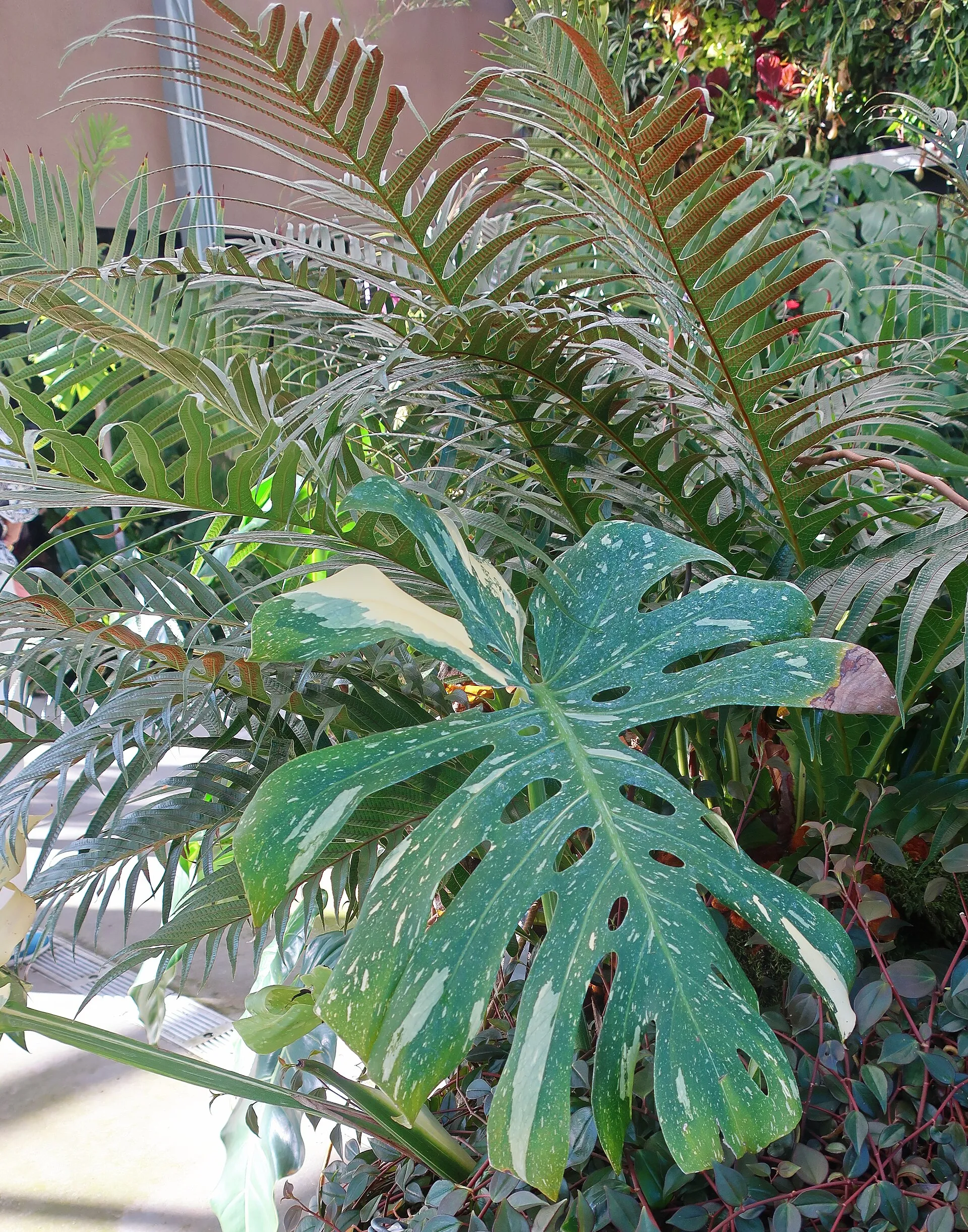
Monstera deliciosa 'Thai Constellation' carries creamy-yellow speckling scattered across every leaf, like flecks of paint. It was developed in tissue culture in Thailand, which is where the name comes from.
The important thing about it is that the variegation is genetically stable. It cannot revert, and it will not throw an all-white leaf.
Light
'Thai Constellation' grows best in bright, indirect light, and it needs more than a plain Monstera deliciosa does. The cream sections cannot photosynthesise, so the plant has less green tissue doing the work.
Too much light
The variegated sections burn faster than green ones and scorch to brown. Direct afternoon sun does this within days.
The plant therefore wants a lot of light without any of it being direct, which is a narrower window than most Monstera.
Watering
Water when the top 5cm (2 inches) of soil is dry, then let it drain fully.
This plant uses water more slowly than a plain deliciosa because it grows more slowly. Watering it on the same schedule is a common way to rot one.
On average:
- Spring & summer: once a week
- Autumn & winter: once every 2-3 weeks
Signs of overwatering
- Yellowing that starts on the cream sections
- Brown mushy patches spreading from leaf edges
- Stems soft at soil level
Signs of underwatering
- Leaves curl inward
- Cream sections go crisp before the green does
Humidity and temperature
Average household humidity works, though above 50% keeps the cream sections from browning at the edges.
Keep it between 18°C and 27°C (65-80°F).
Soil and repotting
Soil
A chunky aroid mix with plenty of bark and perlite. Good drainage matters more here than for a plain deliciosa, because the plant drinks less.
Repotting
Every 2 years in spring. Growth is slow, so it fills a pot slowly.
Feeding
Balanced liquid fertiliser once a month through spring and summer, at half strength. Nothing in winter.
Pruning and grooming
Prune as little as possible. Growth is slow and expensive, and every node you remove is months of waiting.
Cuttings root well and are worth taking when you do prune, since each node carries the variegation.
Give it something to climb
Like every Monstera it is a climber, and a moss pole produces noticeably larger, better-fenestrated leaves.
With this cultivar the effect is more pronounced, because a plant short on energy benefits most from anything that improves its growing conditions.
Common problems
Brown crispy patches on the cream sections
Too much direct light, or low humidity. The pale tissue always fails first.
Very slow growth
Normal for this plant. Not a fault.
Yellowing leaves
Overwatering. Remember it drinks less than a plain deliciosa.
Leaves with almost no variegation
Normal variation. Unlike an Albo, this cultivar cannot revert, so a plain leaf now and then is just how it grows.