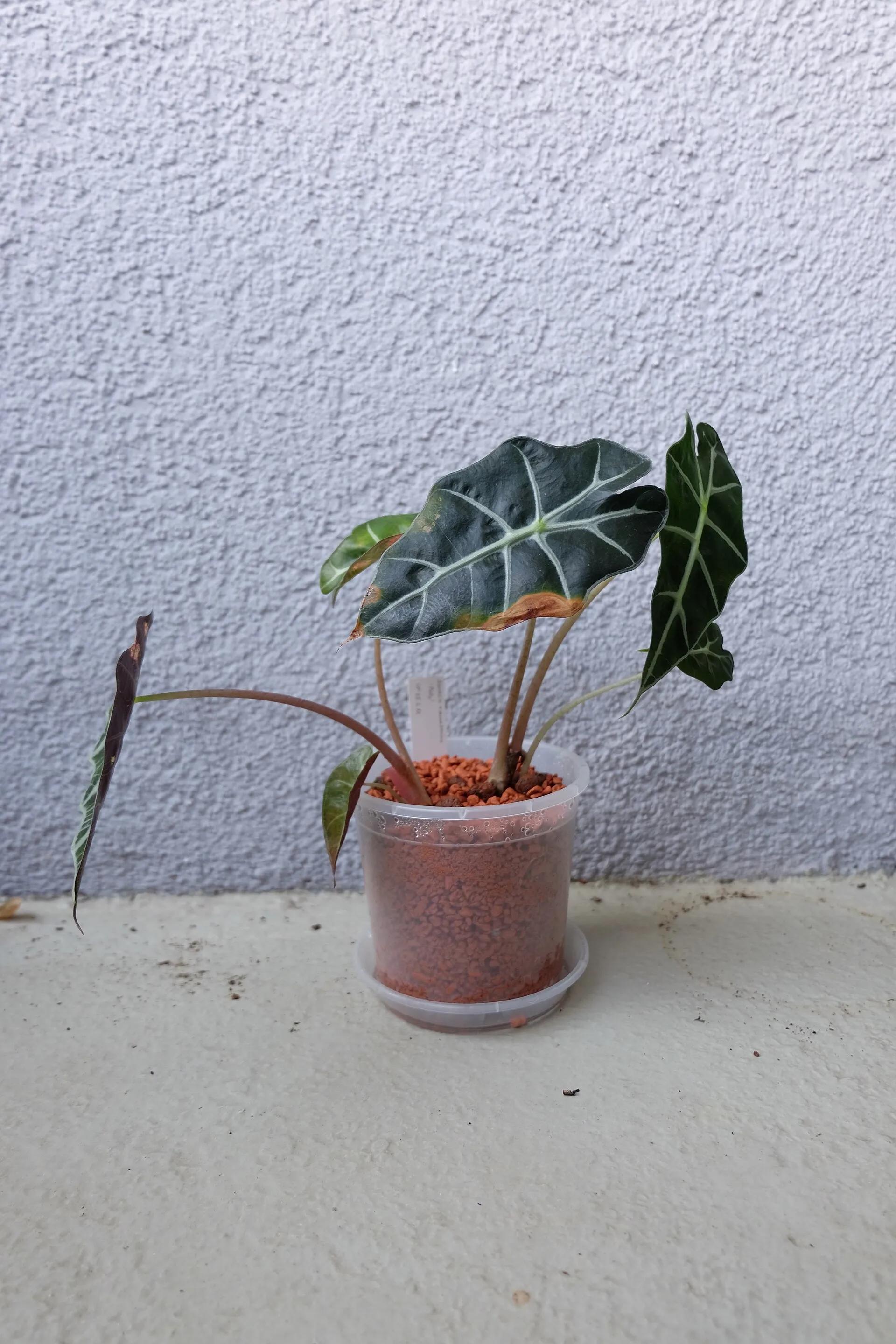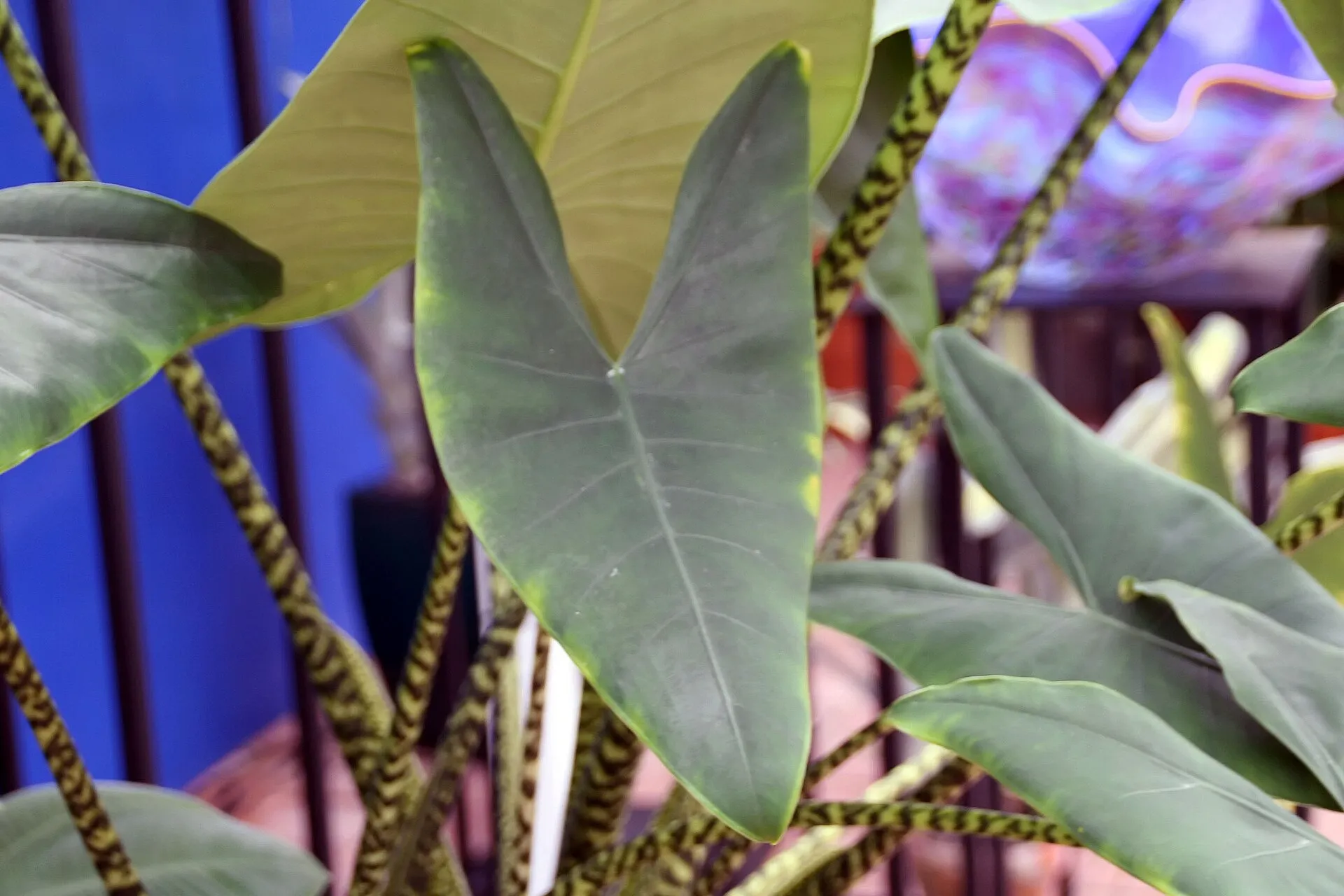
The zebra in the name refers to the stems, not the leaves. They are marbled in cream and dark green like an animal print. The leaves themselves are plain: glossy, arrow shaped, and held high on those striped stalks.
Light
Alocasia zebrina grows best in bright, indirect light. A spot about 1-2 metres (3-6ft) from a bright window is great, and will give it plenty of light without being scorched.
Too much light
Midday and afternoon sun scorches the leaves. The bleached patches it leaves behind do not recover.
Too little light
The stems stretch and thin out, and eventually cannot hold the leaves upright. A plant flopping outward rather than standing tall usually needs a brighter spot, not a stake.
Watering
Alocasia zebrina likes the soil to be moist, but not soggy. Overwatering can easily cause root rot, and that often does not end well.
When to water
Water when the top 3-4cm (1-1.5 inches) of the potting mix feels dry. There is no fixed schedule for this, and it depends on season, light and temperature.
On average:
- Spring & summer: 1-2 times per week
- Autumn & winter: once every 2-3 weeks
Water thoroughly, let it drain fully, and never leave the pot standing in a saucer.
Signs of overwatering
- Leaves turn yellow
- Stems are soft or mushy
- Soil stays wet for days
Signs of underwatering
- Leaves droop or curl
- Leaves have crispy brown edges
- Soil looks very dry
Humidity and temperature
Humidity
Aim for 60% humidity or above. Below that, the leaf edges go crisp and brown within weeks.
A good way to achieve this is by using a humidifier and grouping plants together. Misting does not work. It raises the humidity for a few minutes at most.
Temperature
Keep the plant between 18°C and 27°C (65-80°F). Below 15°C (59°F) growth stops and it often goes dormant.
Cold draughts from a window or a door in winter are a common cause of sudden leaf drop.
Soil and repotting
Soil
Alocasia zebrina needs a chunky mix that drains fast. Roughly equal parts orchid bark, perlite and coco coir works well.
Ordinary potting compost holds too much water and is the usual cause of rot.
Repotting
Repot every second spring, or when the roots start circling the base of the pot.
Go up one pot size only. A plant sitting in a large volume of wet soil rots much faster than one in a snug pot. Always use a pot with drainage holes.
Feeding
Use a balanced liquid fertiliser at half the recommended strength, once a month from spring through to late summer. Stop completely in autumn and winter.
Feeding a dormant or struggling plant does not help it recover. The unused salts build up in the soil and burn the roots instead.
If the leaf tips brown despite good humidity, flush the pot through with plain water to clear the build-up.
Pruning and grooming
Alocasia zebrina does not need shaping. Remove leaves only once they have yellowed fully, cutting the stem close to the base with clean scissors.
Each leaf is a big investment for the plant, so leave the ones that are merely tired.
Wipe the leaves with a damp cloth every few weeks. It keeps them glossy, and it is when you are most likely to spot spider mites early.
Dormancy
This is the most common Alocasia zebrina panic. Every leaf dies back and the plant looks finished.
In lower light and cooler temperatures it stores its energy in a bulb-like base under the soil and waits. It is dormant, not dead.
Keep the soil barely damp, stop feeding, and keep it somewhere warm. New growth usually appears within a few weeks of conditions improving.
To check whether it is still alive, dig gently and feel the base. Firm means alive. Soft and hollow means it has gone.
Common problems
Alocasia zebrina is not an easy plant. So even with good care, you might run into problems.
Drooping leaves
Usually thirst, sometimes root rot. The two look the same from above.
Check the soil before you do anything. Bone dry means water it, and the leaves recover within hours. Soggy means unpot it and look at the roots.
Yellow leaves
It is normal for an older leaf to turn yellow and fall off as a new one grows. Several at once is a problem, and the usual cause is overwatering.
Let the soil dry out before you water again, and improve the drainage if needed.
Crispy brown edges
Humidity is too low, or minerals from tap water and fertiliser are building up in the soil.
Raise the humidity first. If that does not fix it, switch to filtered water and flush the pot through with plain water.
Fine webbing and pale speckling
Spider mites, and Alocasia zebrina is unusually prone to them.
Isolate the plant straight away and treat it before it spreads to the rest of your collection.