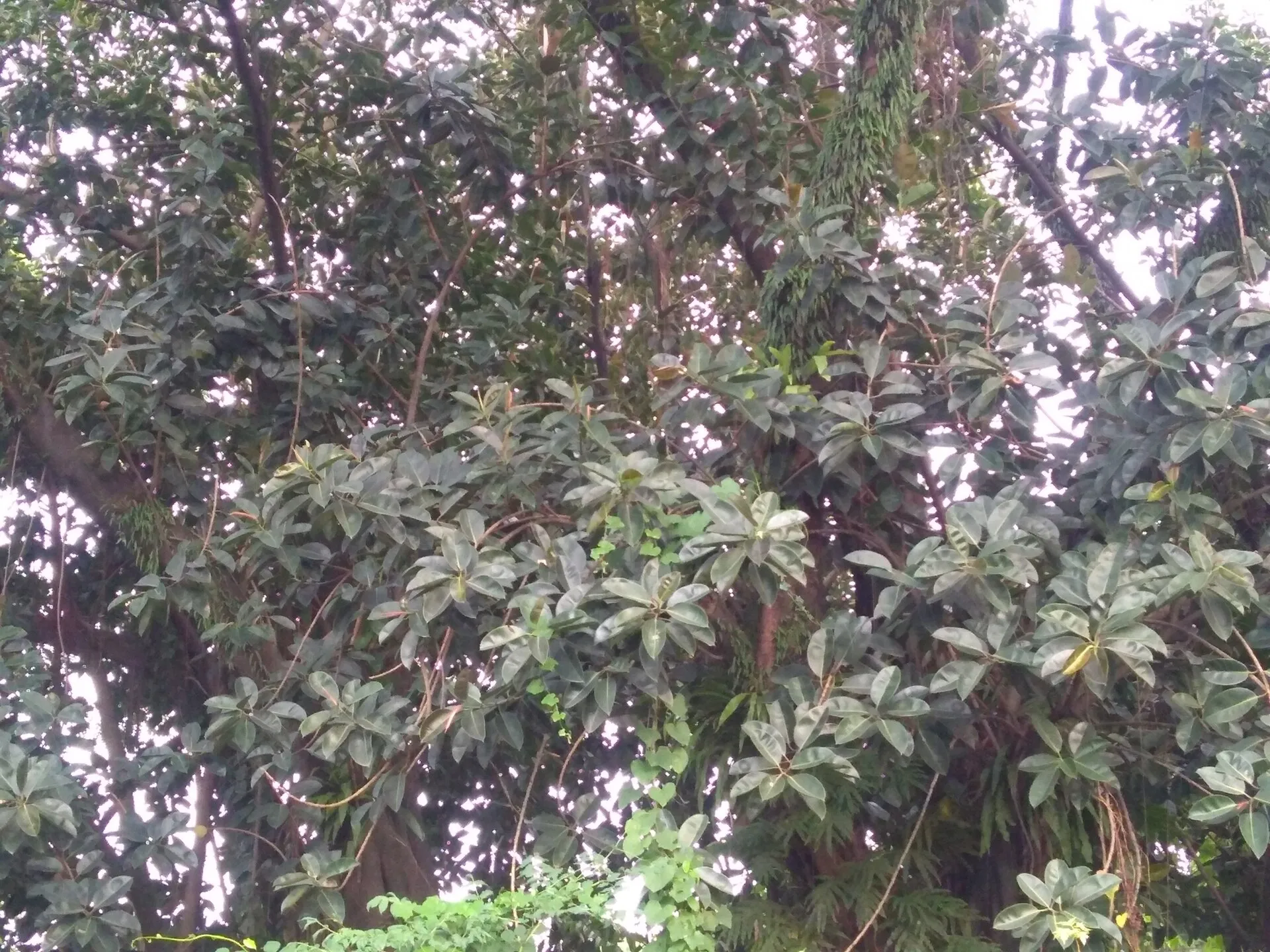
Ficus elastica has thick, glossy, oval leaves on an upright stem, in deep green, burgundy, or cream-variegated forms. New leaves unfurl from a pink sheath at the growing tip.
If you want a large Ficus and have heard the horror stories about Fiddle Leaf Figs, this is the one to start with. It wants the same things and complains far less.
Light
Ficus elastica grows best in bright, indirect light. It tolerates medium light better than most Ficus, though growth slows.
The variegated forms need noticeably more light than the plain green ones. The cream sections cannot photosynthesise, so the plant has less capacity to work with.
Too much light
Direct afternoon sun scorches the leaves and bleaches burgundy foliage to a dull green-brown.
Watering
Water when the top 3-5cm (1-2 inches) of soil is dry. The thick leaves store some water, so it copes with being forgotten better than being kept damp.
On average:
- Spring & summer: once a week
- Autumn & winter: once every 2-3 weeks
Signs of overwatering
- Lower leaves yellow and drop
- Leaf edges develop dark, soft patches
- Soil stays wet for days
Signs of underwatering
- Leaves curl slightly at the edges
- Leaves go dull and lose their shine
- Leaf drop after a long dry spell
Humidity and temperature
Ordinary household humidity is fine. Keep it between 15°C and 27°C (59-80°F) and away from cold draughts, which cause leaf drop.
Soil and repotting
Soil
Well-draining compost with perlite mixed through.
Repotting
Every 2 years in spring. A Rubber Plant kept in a smaller pot stays smaller, which is useful if you do not want a 2m (6ft) tree.
Feeding
Balanced liquid fertiliser once a month through spring and summer. Nothing in winter.
Pruning and grooming
Cut the main stem just above a leaf to encourage branching. Without pruning, Ficus elastica grows as a single unbranched pole.
The cut releases a lot of milky sap. Wear gloves, and dab the wound with a tissue until it stops.
Wipe the leaves regularly. Their gloss is most of the appeal and dust ruins it.
Common problems
Lower leaves yellowing and dropping
Some loss is normal as the plant grows taller. Several at once means overwatering.
Leaves dropping suddenly
A cold draught or a big change in conditions. Ficus dislike change of any kind.
Variegated leaves reverting to green
Not enough light. Move it brighter and prune back to well-marked growth.
Sticky residue on leaves or the floor below
Scale insects on the undersides and stems. Check carefully and treat before it spreads.