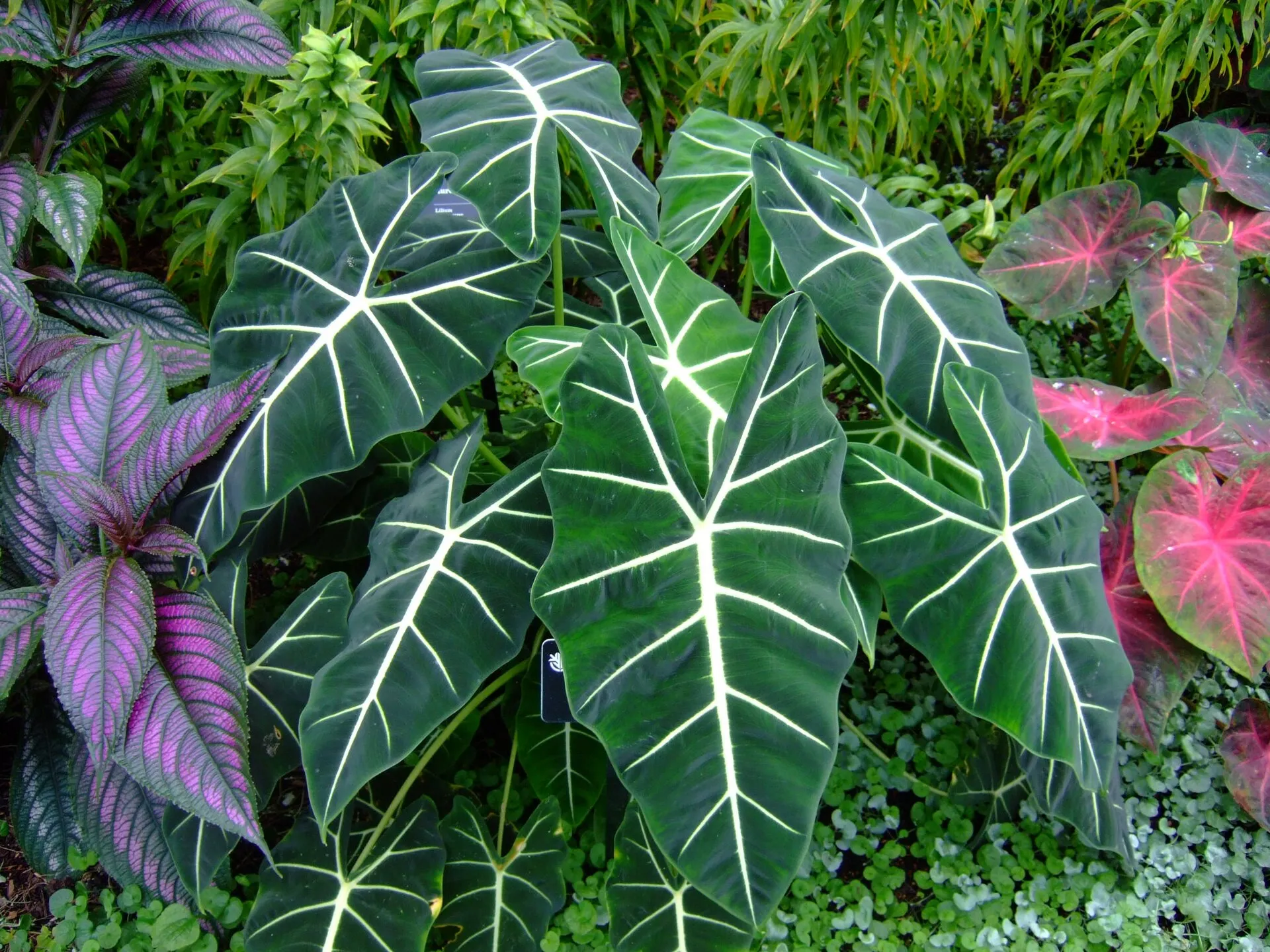
Alocasia 'Frydek' has deep matte green arrow-shaped leaves with a velvet surface, cut through by thick white veins. It is one of the most striking plants in the genus.
It is also one of the most demanding, and it attracts spider mites more reliably than almost anything else you can own.
Light
Alocasia 'Frydek' grows best in bright, indirect light. The velvet surface absorbs light rather than reflecting it, so direct sun burns it quickly.
Too much light
Dry bleached patches, and the velvet going flat and dull where it has scorched.
Too little light
Long stretched stalks, smaller new leaves, and the plant leaning hard toward the window.
Watering
Water when the top 3-4cm (1-1.5 inches) of the mix feels dry, then let it drain completely.
On average:
- Spring & summer: twice a week
- Autumn & winter: once every 1-2 weeks
Signs of overwatering
- Leaves droop while the soil is still wet
- Stalks soften at the base
- Roots turn brown and mushy
Signs of underwatering
- Leaves droop and the stalks bend over
- Leaf edges go crisp and brown
Humidity and temperature
Humidity of 60% or above. This is not optional with 'Frydek'. Dry air produces crisp leaf edges within weeks and invites spider mites.
A humidifier works. Misting does not.
Keep it between 18°C and 27°C (65-80°F), away from radiators and draughts.
Soil and repotting
Soil
A free-draining aroid mix of orchid bark, perlite and coco coir.
Repotting
Every second spring, going up one pot size. The corm rots in a large volume of wet soil, so a snug pot is safer.
Feeding
Half-strength balanced fertiliser every 3 to 4 weeks through spring and summer. Nothing in autumn and winter.
Flush the pot with plain water a couple of times a year to clear built-up salts.
Pruning and grooming
Remove fully yellowed leaves at the base with clean scissors.
Do not wipe the velvet leaves with a damp cloth, because water leaves permanent marks. Use a soft dry brush.
Spider mites
'Frydek' attracts spider mites more reliably than any other Alocasia. The velvet surface makes early webbing hard to see, so the infestation is often advanced before it is noticed.
Check the leaf undersides every time you water. Look for fine pale stippling across the surface and webbing where the stalk meets the leaf. At the first sign, isolate the plant and treat it every five to seven days for at least three rounds.
Dormancy
It drops leaves and retreats to the corm in low light or cold. Keep the soil barely damp, stop feeding, and wait.
Firm corm means alive. Soft and hollow means gone.
Common problems
Fine webbing and pale stippling
Spider mites. See above.
Crispy brown edges
Humidity too low.
Dull, marked velvet
Water marks from wiping, or sun damage.
Sudden leaf loss
Dormancy, or a reaction to being moved or repotted.